OG: Approved - NFL Fan Therapy
Featuring the Next Generation of Storytellers Rising from the Creator Economy
Welcome to OG: Approved—where rule-breaking creators shape the future. Hand-picked by Open Gardens, they’re not following the playbook—they’re writing the next one.
Name: NFL Fan Therapy
Instagram: 68.9K Followers
Youtube: 33.4K Subscribers
Tik Tok: 63.6K Followers
What Is NFL Fan Therapy?
NFL Fan Therapy is a sketch series built on a premise that feels almost too simple to work: put NFL fans in therapy and let them explain themselves.
Each episode stages a session between a therapist and a fan of a specific team. The therapist asks measured, reasonable questions. The fan responds with rationalizations, long-held grievances, selective memory, and bursts of misplaced confidence. The format doesn’t change much from episode to episode, which is exactly why it holds up. The room stays the same. The emotional weather shifts with the season.
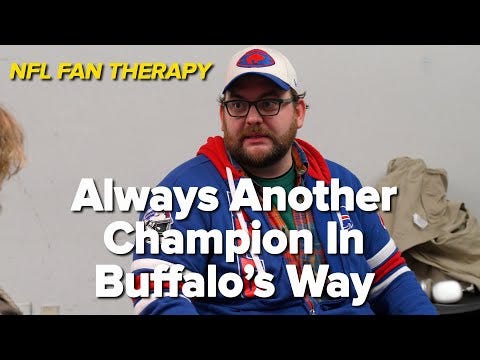
What becomes clear after a few episodes is that it isn’t really about football strategy or game breakdowns. It’s about identity. It’s about what people attach themselves to and how they justify staying attached when the return on that investment is mostly disappointment. A Patriots fan trying to reconcile the end of a dynasty. A Bills fan framing suffering as meaning. A Cowboys fan whose reference point is permanently anchored in the 1990s. A Browns fan who sounds less angry than resigned. The teams rotate, but the psychological patterns feel stable.
The NFL supplies the inciting incident every week. A blown lead, a draft decision, a quarterback collapse, a miracle comeback. The show doesn’t rush to be first. It takes whatever just happened and treats it as emotional evidence. Instead of reacting to the game, it asks what the game did to the person.
The series was created by Nick “Fitzy” Stevens, a Boston sports radio personality who has spent years inside that ecosystem. Anyone who has listened to Boston sports radio knows the cadence of overreaction and the way fandom blurs into personal narrative. Fitzy didn’t invent that energy; he redirected it into character work. Early episodes were made with his brother and a group of local comedians and actors, shot in batches and built around improvisation. The characters feel less like punchline machines and more like people who have been arguing the same points for years.
What gives the series durability is the restraint. The production is simple. The camera stays on faces. The escalation comes from dialogue, not edits. Because the structure is stable, it can absorb new storylines without reinventing itself. Each season becomes another layer added to the same emotional blueprint.
Seen over time, NFL Fan Therapy reads less like a collection of viral sketches and more like a running archive of fandom under pressure. The league changes constantly. Coaches are fired. Quarterbacks are traded. Windows close. The emotional logic underneath all of it barely moves.
Three Things We Love About NFL Fan Therapy
It turned sports reaction into character work: Most football content online is built on speed. React fast, be loud, move on. NFL Fan Therapy does the opposite. It slows the moment down and asks what the game did to the person. The therapist setting forces self-exposure. The humor comes from watching someone justify their loyalty in real time. That shift from analysis to identity is what gives the series weight beyond the headline.
The format is durable: The room doesn’t change. The structure doesn’t change. The league does and that alignment matters. Every Sunday produces a new inciting incident, and the series absorbs it without reinventing itself. Because the container is stable, the characters can evolve season after season. It feels less like a viral sketch and more like a recurring chamber for confession.
It understands fandom from the inside: Stevens comes out of Boston sports media, which means he knows the cadence of overreaction and the logic of delusion. The characters don’t feel like outside satire. They feel like heightened versions of real conversations. That recognition is what keeps the performances grounded instead of gimmicky.