


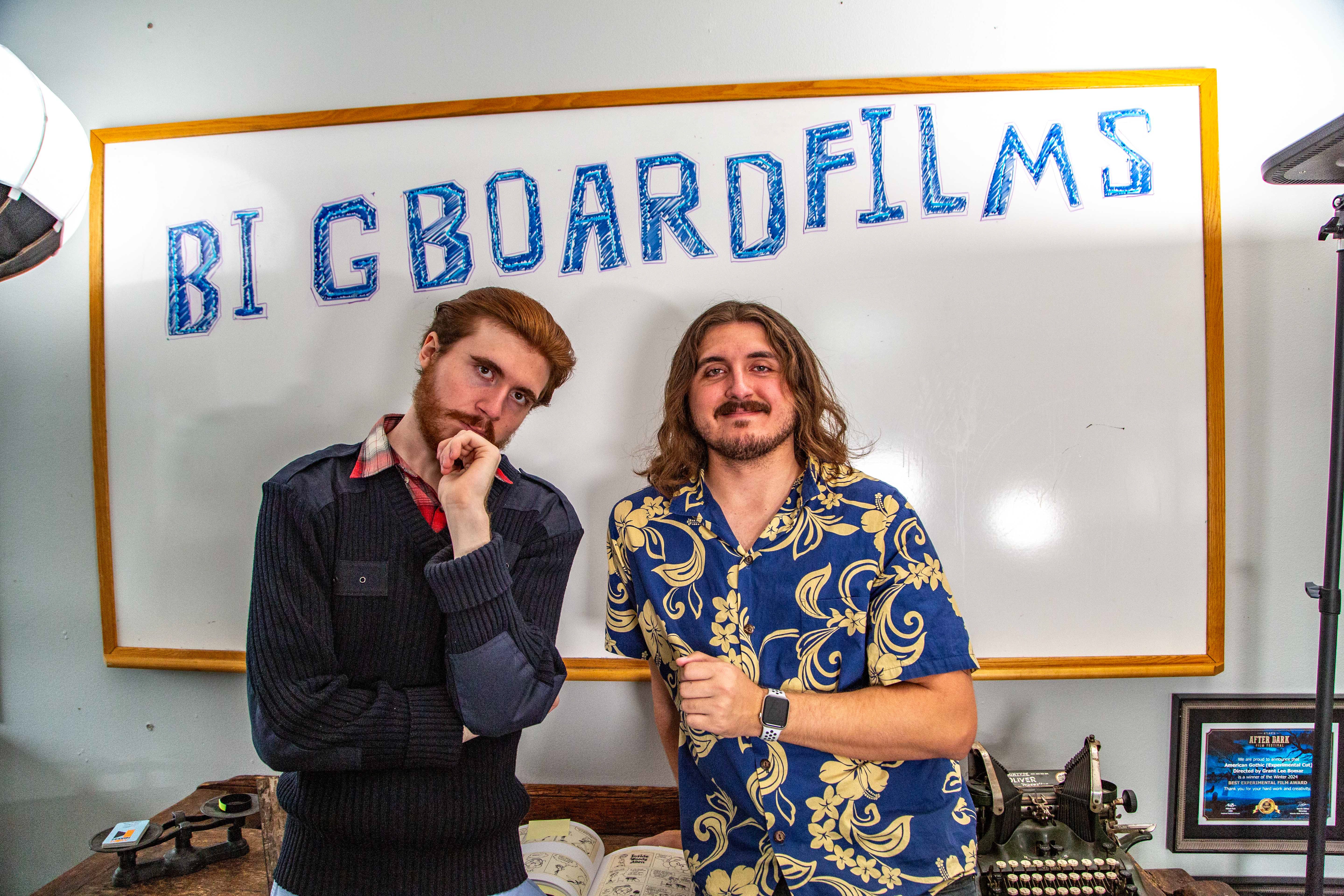
Welcome to OG: Approved—where rule-breaking creators shape the future. Hand-picked by Open Gardens, they’re not following the playbook—they’re writing the next one.
Name: The Bomar Brothers (Cult Of Vision)
Instagram: 171K Followers
*We are expanding the OG: Approved section! We’ve decided to interview creators. To understand the many ways creators are pushing forward, we have to get under the hood with them one on one (or in this case one on two) and find out exactly what their goals are and how they plan to achieve them. So, without further adieu we are happy to present our first OG: Approved Interview…
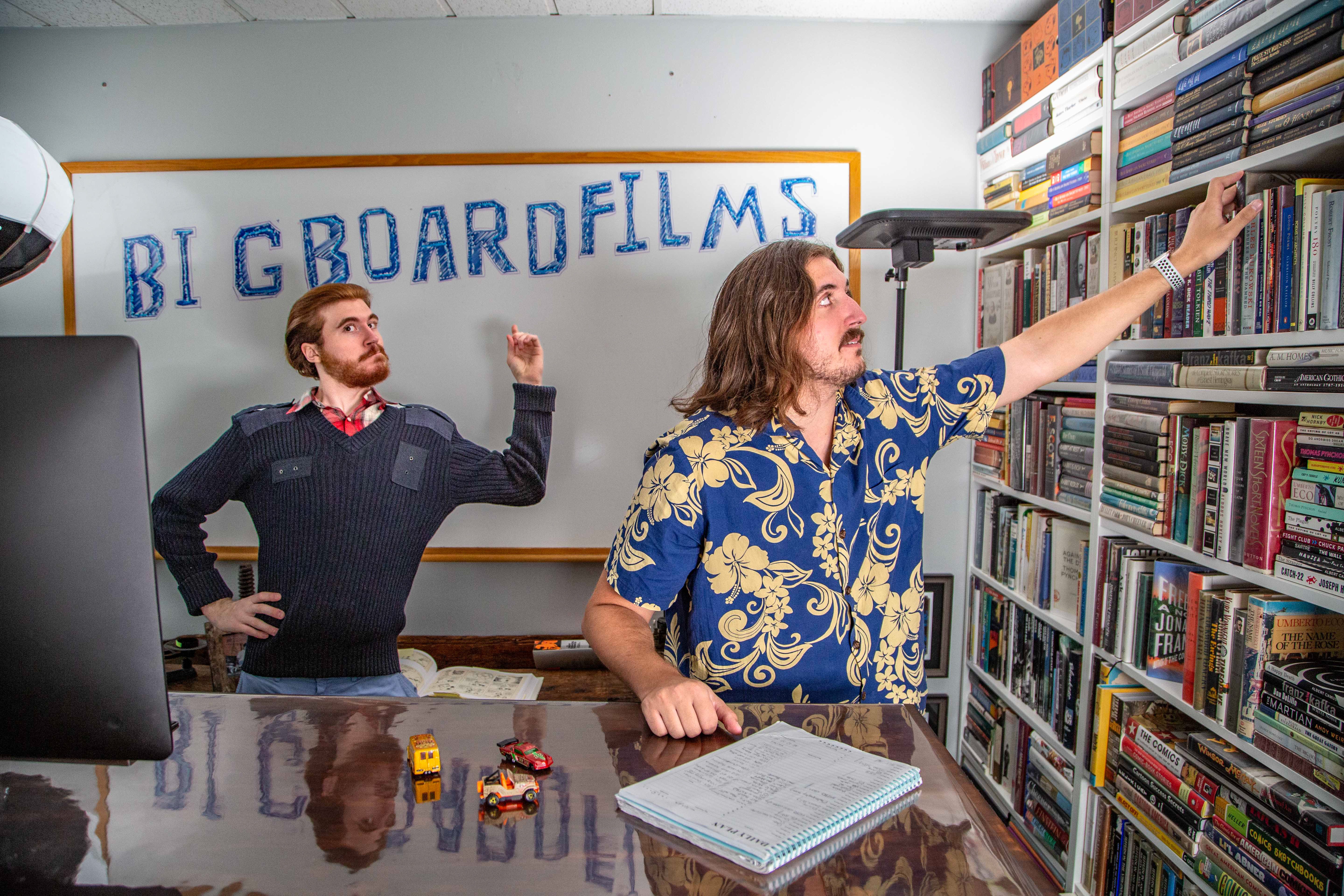
When I discovered the Bomar Brothers, it wasn’t through traditional channels or a film festival. My algorithm blessed me with a video that many may misidentify as AI slop.
The title? Fluff Fiction. It’s a parody of Pulp Fiction cast entirely with Muppets. After some digging, I found that these videos were not just basic AI outputs by a couple AI whiz kids. They were marketing missiles built by two twentysomething filmmakers trying to get their names out there. When I eventually got the chance to speak to Grant and Dean, I felt like I was in the garage with Steve Jobs and Steve Wozniak in the 70’s.
This story is about two young filmmakers working out how to break in. They haven’t yet, and that’s part of why it’s worth telling now. What follows is the tools they’re using and the way they read the landscape. For me, it’s just a hunch. But it feels like a new age of indie filmmaking, and the door is wider than people think.
The Bomars were homeschooled and started making shorts on their dad’s iPad at eight and ten. The family was the studio: parents producing and mentoring, kids directing. American Gothic got made in thirteen days when Grant was seventeen. The brothers are also master-rated chess players. Grant has two national titles.
The Account
Fluff Fiction drops the Muppets into the grimiest corner of nineties crime cinema, and by the brothers’ account the work has drawn notice from inside the films themselves, including a blessing from one of the actors they parody. That doesn’t mean they didn’t have second thoughts.
“I was on the verge of maybe being, I would say, even as far as going anti-AI. I didn’t know if I believed in the technology. I was buying into a lot of the arguments against it. But then I started using it, and I realized quickly that this was something I had to learn how to master.” (Dean Bomar)
Grant answers with art history. Picasso could paint like an old master years before he broke a single rule. Warhol turned printmaking into mass production and called his studio the Factory. The point being that the greats learned the fundamentals, then used whatever was new. Their film heroes did the same thing.
“David Lynch, who is a big film hero of ours, made Inland Empire entirely shot on MiniDV when that was so very new, and that was a risk. These people that we look up to, who you would consider classic and did things analog, were still finding ways to push the frontier of what the medium could do.” (Grant Bomar)
To him, AI is what CGI was when George Lucas first bet on it.
“It’s a tool that allows you to do things you couldn’t do before. It doesn’t replace the artistry, it just gives you a new conduit to express it.” (Grant Bomar)
You can take or leave the lineage they’re claiming. The operation underneath the account is harder to argue with.
A flagship episode is about twenty hours of work between two or three people. Grant handles the cut. He watches the source film, lays down the structure, then writes change notes for Dean. Dean builds whatever doesn’t exist yet. That part runs eight to twelve hours of rendering and editing, and when the tools can’t reach the image in his head, he sketches it himself or digs up references until they get there. Every episode gets a poster designed from scratch. And they release weekly, no matter what.
“Instagram is moving so fast. Millions and millions of posts are going up a day. A week without posting, and you’re gone out of the conscious of Instagram.” (Dean Bomar)
Grant and his father keep spreadsheets on every video. Skip rate, share rate, retention broken out second by second. It sounds like overkill until you remember studios pay testing houses real money for this. The Bomars get it off a puppet video, every week, and write it down.
“Making the video loop around helps people stay longer, so we make the video start seamlessly. A lot of the Fluff Fictions have an editing style that is similar to Pulp Fiction, where it starts at the end, then cuts around to the beginning, plays through, and loops back to the end.” (Grant Bomar)
A video with no visible seam gets watched two or three times before you realize it. The retention hack and the Pulp Fiction homage are the same edit.
The community work gets done by hand too. The brothers and their dad answer comments and DMs for hours a day. The account earns about enough from Meta’s monetization programs to cover the compute bill, and they keep it there on purpose. They’ll tell you the work is protected as transformative parody, that they’ve done their research. That’s their reading. The law around AI-generated derivative work hasn’t caught up far enough for anyone to check it, and they know it, which is part of why the account was never meant to be the business.
“We’re doing this to build a social following and to learn the tools. We want to build a community so we can crowdfund, we can use it as leverage, we can use it as a calling card. There’s a lot of different ways we can use the account as a means to help our film work.” (Dean Bomar)
The Bomar Brothers Playbook
1. Borrow the Attention, Keep the Audience
Recognizable IP does the hook work for free. A stranger scrolling past needs no introduction when the characters show up already loved, and that buys the first three seconds, which on these platforms is most of the battle. Everything those seconds earn belongs to the Bomars, though, not the IP. The follows and DM relationships are theirs, and so are the commenters asking who’s playing which character next week. That community is the real asset, and they treat it like one. Nobody trying to scale a page efficiently would spend their hours the way these two do, and they know it. “We don’t use chatbots,” Grant says. “We write all of our followers directly.” It’s a family operation, too, and the brothers want that on the record.)
2. Every Video Is a Rep
The twenty hours an episode is doing double duty. The content is the visible half. The rest is school. Dean started out close to anti-AI and got fluent in months because the account forces daily reps in Premiere, After Effects, Photoshop, and every model they can get their hands on. The spreadsheets do the same job for storytelling. Most filmmakers guess at where an audience checks out. These two get told, in numbers, after every post.
“We’ve been learning skills as a trade through this engagement with the audience. We learn what people like, what they don’t like, what gets more watch time, what gets more engagement, and we can use those storytelling hooks.” (Grant Bomar)
They’re explicit that this education is earmarked for the features.
“We can find ourselves easily getting into the trap of making a feature that is uninspired or flat because we aren’t doing that work that social media is asking of us: to grab your attention and bring you into the story so that you want to pay attention to what happens next.” (Dean Bomar)
3. Final Authorship
The tools flatten everyone to the same starting point. What separates you is whatever you learned before you touched them. The Bomars learned a lot. They can draw at near-realism. They direct actors through improv, Cassavetes-style. They design their own posters and know how to structure an edit. All of it shows up in the AI work. Shots get planned on paper first, sketched out or pulled from references. Characters carry over from episode to episode on purpose, like a cast. Environments get designed, not generated. Grant talks about the tools the way he talks about improv, throw out a broad idea and work with what comes back. With one rule he won’t bend on.
“You as the human always have final authorship over it.” (Grant Bomar)
That’s the gap between what they make and what the feed is drowning in. It’s why their stuff gets mistaken for original work by people who should know better. I know because I sent it to one.
4. Catching the Big Fish
Lynch wrote films by collecting scene ideas on cards until a feature assembled itself. He called it catching the big fish. Grant treats it as an instruction manual.
“He would write down on post-it cards seventy different scene ideas, and once you had enough for a full film, you put it together. And that’s sort of what we’re doing with the social media. We’re finding all these different little ideas that work, and then those are going to feed the larger projects.” (Grant Bomar)
Every video is a scene idea getting tested on a live audience. The account is the card stack, and the poll questions and comment threads do the job a development exec used to pretend to do.
5. The Fusion
There’s no plan here to do AI content until they’ve earned the right to make real films, then drop it at the door. Nothing gets abandoned.
“We want to go back to the traditional and bring the AI into the traditional workflow so that we can fuse the two together. More of a hybrid mixed media style type of filmmaking.” (Dean Bomar)
Dean’s reference point is Bruce Lee. Jeet Kune Do took the useful piece of every fighting style and threw the rest away. And the test case is already running. They’re remastering American Gothic with AI-assisted color and VFX, and Korey Pereira, the Emmy-winning sound designer from Stranger Things, is polishing the audio for a fall festival re-release. A film shot the old way, proven at festivals, going back out on the circuit with the new tools worked in. The whole plan, sitting in one movie.
Mid-Game
Everything above describes a position, not a victory. To their credit, the brothers know the difference.
The audience has never been tested on a Bomar original. Everyone who follows Cult of Vision signed up for the parodies. The plan is to start slipping original work in between them, stuff with the same creative DNA, until the audience’s taste comes along for the ride. It’s sensible and completely unproven. Grant expects a slight hit when the original content starts arriving. Nobody knows yet if it stays slight.
The legal foundation is a good-faith reading of fair use in a territory where the law hasn’t finished forming. A platform policy change or a studio enforcement wave could take the account down tomorrow, and it wouldn’t matter how well they’d run it. They’ve built with that in mind. The account is skills and audience. The revenue was never the point. The risk is still sitting there either way.
And a following doesn’t pay for a movie, at least not yet. Watching Katarina is half shot and waiting on a grant decision.
Their answer to all of it is the chess. Grant plays in a school built around what’s called the imbalances, the slow accumulation of small advantages across the whole board.
“It’s not about finding the brilliant move, the sacrifices, the tactics. It’s about bettering your position one move at a time until you break your opponent, and then you can have the brilliant move.” (Grant Bomar)
That’s the company doctrine, stated as a game. The festival track, the audience, the tool mastery, the school, the producer relationships, the local ties to Texas classical musicians and the UT dance departments they make dance films for. No single file wins the game. They all just improve the position. Worst case, they keep growing the audience, keep sending shorts to festivals, keep their education going at UT, and wait.
“We’re gonna reach that tipping point where everything’s gonna click, and if it’s not now, it’s a matter of when.” (Grant Bomar)
The Way Forward
I asked them at the end what they’d say to the people watching from the sidelines. And there are a lot of them right now. Writers, directors, and actors with real credits who can’t get work. Film students staring at a pipeline that no longer leads anywhere in particular.
Grant’s answer starts with the obvious part, create constantly, then gets specific. Build your mastermind group. Find the people who think like you and work like you, and develop the goal together. The lone-genius thing is mostly a story people tell after the fact. The Bomars came with theirs built in. Two brothers, their dad producing, their mom in the mix. But the principle doesn’t require sharing a last name.
Dean’s answer is the one I keep thinking about.
“Every event is a networking opportunity. Every person is an opportunity to work with. You can network laterally, with the same level of person, not just up. Film might be the only art that encompasses every single discipline, so every single person is someone to talk with and meet and create with, or just learn something from.” (Dean Bomar)
None of it required permission, and almost none of it required money, which makes it the oldest tradition in independent film wearing new materials. Look at what’s lying around and build with it.
Does it work? Nobody knows yet, including them. But two brothers with half a feature in the can are playing the long game in public, and I plan on checking back in on the board.