


FRESH CLIPPINGS
Instagram Wants to be TV
Instagram announced that it is testing horizontal video and long-form episodic storytelling on Instagram for TV, its connected TV feature that is now expanding to Samsung devices after previously being limited to Amazon Fire and Google TV products.
Instagram’s VP of product Tessa Lyons called television the next frontier for the app, and it doesn’t mean it is reinventing itself. It is Instagram following its creators, who have already been using the platform to promote extended content they were sharing elsewhere. So in essence, it’s the platform catching up to behavior that was already happening as creators expand.
Jen Topping flagged something that ties all of this together. Meta is running an annual ad revenue rate of $50 billion on Reels alone, more than every company except Disney made on video advertising last year, and yes, that includes YouTube. The push into connected TV opens up a new surface for that advertising machine, and for producers sitting on shelves of content, an Instagram account is about to carry a different kind of weight, assuming the revenue sharing improves to match the ambition.
The Attention Map
Evan Shapiro published something pretty useful this week: the first attempt anyone has made to measure consumer attention across all screens simultaneously, collapsing television, mobile, and desktop into a single zero-sum budget. He calls it the ESHAP Cross-Screen Attention Index, and the premise behind it is one the media industry has been avoiding for a while.
The measurement industry has always kept screens in separate silos. TV ratings live in one place, mobile handset data in another, browser logs somewhere else entirely. Publishers and advertisers each look at their own numbers and declare victory, while nobody is tracking how the same human being moves across all of those surfaces in the course of a single day. Shapiro’s argument is that this collective blindness is how you end up misallocating billions of dollars in advertising spend.
The data itself produces a result that will not surprise regular readers of this newsletter. Only Baby Boomers watch more video on televisions than on phones. Every other generation of Americans watches video on their phones two to three times more than on their TVs. In a survey of 3,000 US consumers, 59% said they use their phone to watch video more than any other device. Just 28% named TV as their primary screen.
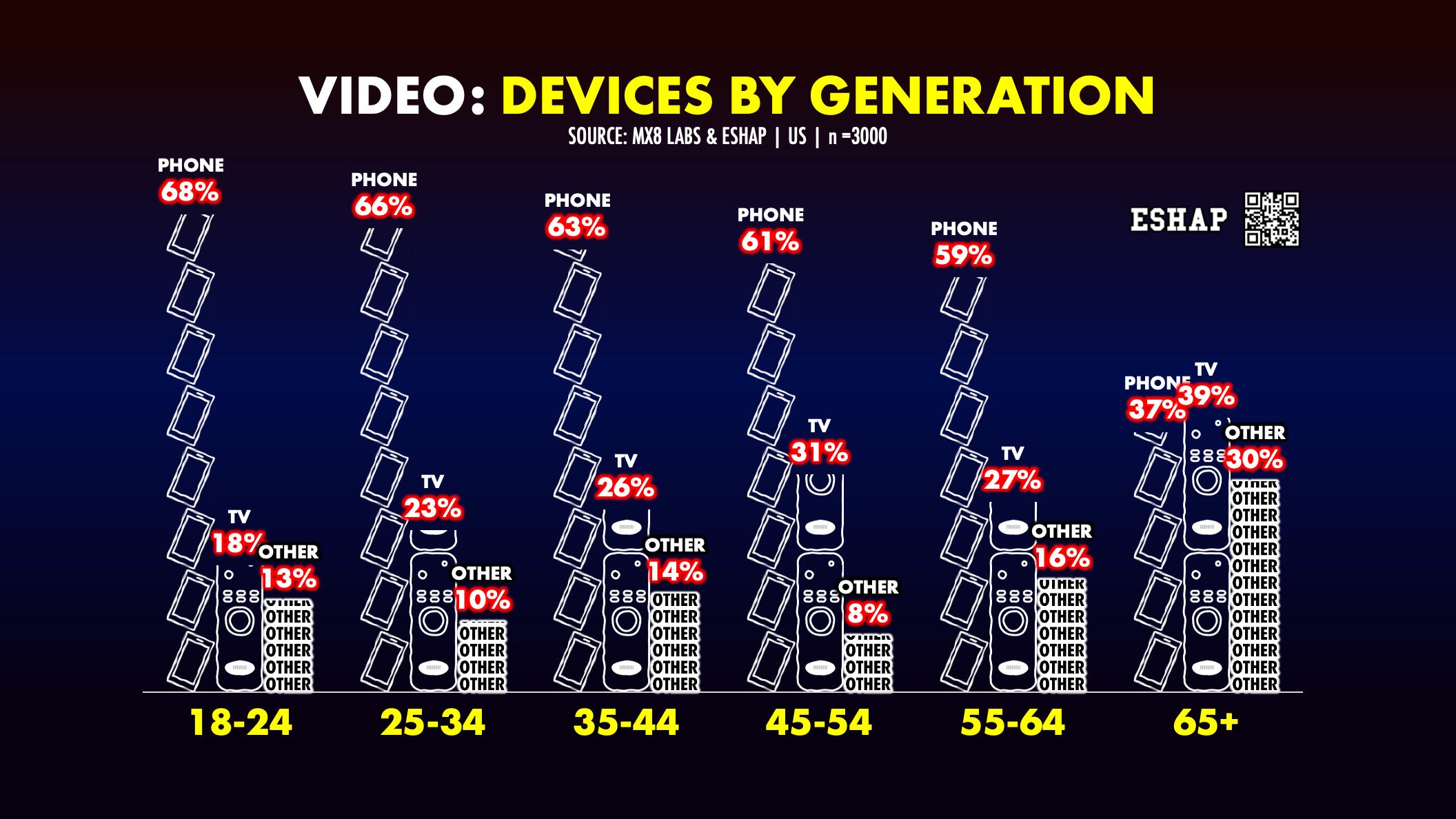
The platforms chasing the living room screen are chasing a real shift in viewing behavior, but the phone remains the dominant surface for everyone under 55 by a significant margin. Any distribution strategy that treats these as separate conversations is, as Shapiro puts it, wasting half its money.
Hollywood's Most Gilded Gate Has Been Breached
The New York Times ran a piece this week about creators having arrived at the center of Hollywood, i.e. CAA. It’s something we’ve been talking about for well over a year now here at Open Gardens, but it’s not at the center of the cultural conversation.
The scene that opens the article says it all. In March, Dhar Mann, a YouTube creator with over 170 million social media followers, sat down for a 90-minute all-hands strategy session at CAA with agents from scripted television, film, consumer products, reality TV, publishing, and brand marketing all in the room. Mann noted that the only way you used to see that many CAA agents gathered in one place was for an A-list director or actor. That’s where all the resources used to go.
We’ve been tracking that shift, but it has accelerated sharply. CAA recruited Brent Weinstein, widely considered the godfather of digital talent representation, to restructure its creator business about a year ago. New clients include the Stokes Twins, Ben Azelart, and Rebecca Zamolo. The agency is making its first major showing at Cannes Lions, the advertising gathering that has become one of the most important dealmaking events for the creator economy. And as we covered a few weeks ago, CAA and TPG formed Compound Creative Holdings, a $250 million fund to acquire and operate creator-led businesses outright.
CAA’s chief executive Bryan Lourd put it plainly: the numbers are undeniable in terms of the audiences creators are reaching and what the economics are starting to become. He went so far as to compare Dhar Mann’s operation in three Burbank warehouses to what Charlie Chaplin’s studio looked like in the early 1900s.
GARDEN VIEW
A panel moderated by Ryan Seacrest on how brands can move beyond reacting to culture and start shaping it, identifying the right moments to show up, executing with speed and authenticity, and building relevance through partnerships across sports, entertainment, and the creator ecosystem.
The lessons here apply just as much to scripted storytelling as they do to brand strategy. Knowing when and how to enter a cultural conversation, and doing it with a genuine point of view rather than a trend-chasing instinct, is something every producer needs to know.
HARVEST QUOTE
"For the next few years at least, you're still gonna think about where the audience is, and the audience is still gonna show up thinking, 'I go to YouTube for explainer content, I go to Instagram for more aesthetic content, or TikTok for fun scrolling.'"
— Lia Haberman, newsletter creator, speaking on a panel about platform differentiation
A useful reminder amid all the convergence talk. Platforms are blurring at the infrastructure level, but audiences still arrive with distinct intentions depending on where they open the app. YouTube, Instagram, and TikTok may all be chasing the living room and the long-form format, but the person sitting down to watch still carries a different expectation for each one.
Editorial Note: Garden Harvest is off next week for the Fourth of July holiday. See you the week after.
Have a great weekend…
Audience intentions, cultural relevance and genuine point of views are important aspects for the creation of content across platforms.
Trends come and go and loose relevance.
Quality Content with: Values, Love, Relationships and Cultural Relevance appeal to all human beings and always remain.