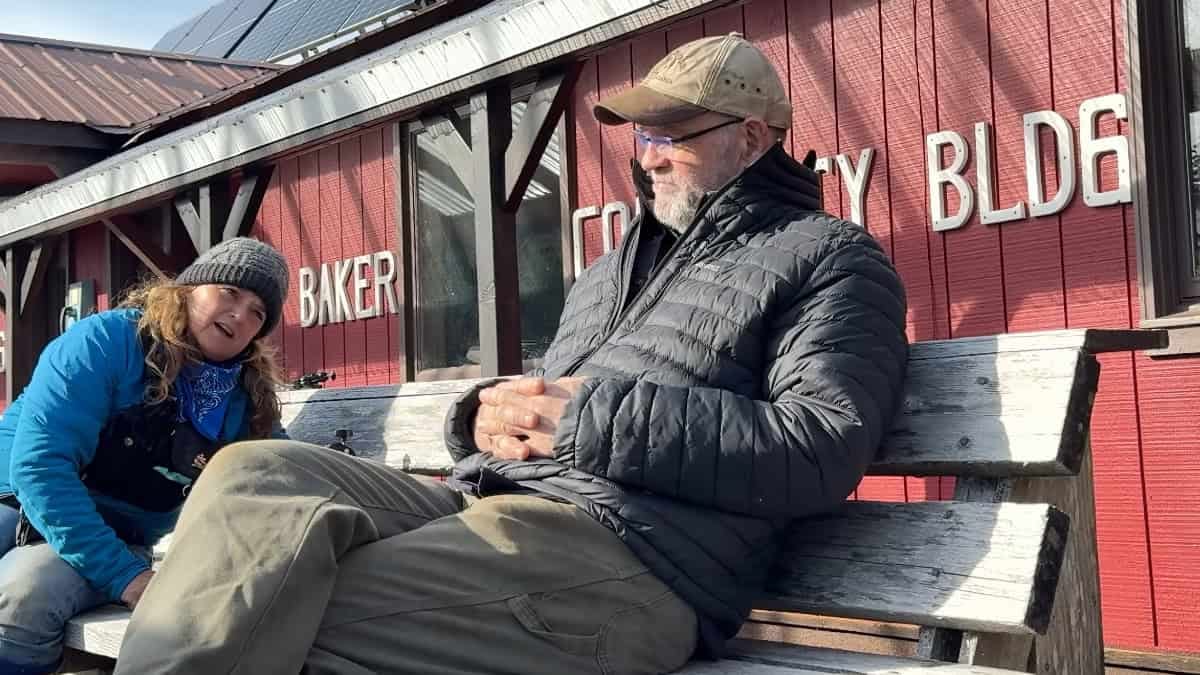
This is not just a feel-good story about resilience. And it’s not just a case study in how one producer survived a canceled TV show.
It’s a blueprint for what legacy media keeps getting wrong, and what the next generation of producers, executives, and marketers will need to relearn fast. The shift from audience to community is no longer theoretical. It is operational. And the people who understand that are already building on the other side of the collapse.
Before going further, it’s worth being clear about the scale of this story. What this producer built is small by Hollywood standards. Tens of thousands of people, not millions. A show that on good days reaches around 100,000 views, not something that moves markets or stock prices.
That’s exactly why it matters.
I came across this story because a legacy unscripted producer, Jeff Kmiotek, who is also making interesting moves in the creator space, flagged something unusual to me. A longtime unscripted field producer whose National Geographic show ended after a long run didn’t move on to the next gig. She went somewhere else entirely. She went to the fans. Specifically, to a Facebook community that had quietly formed around the show over years and was largely ignored by the network that benefited from it.
That community helped her buy new gear. Supported production. Followed her as she rebuilt the series independently on social platforms. No network. No greenlight. Just trust, continuity, and ownership.
Her name is Mickey Ramos.

What she did sharpened something I’ve been feeling for a while. In legacy media, we obsess over reach, ratings, and consumption. We rarely talk about participation. Identity. Stewardship. On more than one show I’ve produced, I begged platforms to do the obvious, gather the superfans, give them content between seasons, let cast speak directly to them, turn viewers into advocates. The answer was always the same. Great idea. Our system doesn’t support it.
This story isn’t really about unscripted television. It’s about what happens when a legacy system breaks and the people inside it are forced to improvise. Still, unscripted is where Mickey comes from, and it’s worth remembering what’s happened to that sector of our business.
Unscripted TV isn’t in a slump. It’s in structural decline. Since the streaming bubble burst, U.S. unscripted production has fallen off a cliff. ProdPro data shows a 40 percent drop in U.S. film and TV production versus a 20 percent global decline, making the pain disproportionately American.
In Los Angeles, reality TV shoot days collapsed more than 56 percent in a single quarter in 2024, effectively wiping out the category as a reliable employment base.
This isn’t about changing tastes. It’s about capital retreating. Conglomerates like Warner Bros. Discovery and Paramount are prioritizing debt reduction and free cash flow over volume, cutting the mid-budget unscripted shows that once sustained a middle class of freelancers. What was once the industry’s most dependable engine has been reset into a smaller, risk-averse, globally outsourced business. The volume era is over.
Mickey Ramos rode the entire arc of that wave.
She didn’t come up through a polished pipeline or a studio track. She was waiting tables at Gladstones on Sunset when she stumbled into public access TV and realized how little permission it took to make something. She created a live show, cast other waiters and neighborhood kids, and let them swear on air because no one was stopping her. The show cost nothing but her tips, and Venice kids became local celebrities.
With no family in the business and no safety net, she brute-forced her way in by making herself indispensable one relationship at a time. That led to ComedyWorld.com during the dot-com boom. The project failed, but it bought her access. From there, she entered the unscripted ecosystem through sheer volume and endurance, working on shows like Paradise Hotel 2, Floor Is Lava, Dr. Pimple Popper, and 1000-Lb Sisters. She stayed a field producer by choice. Boots on the ground, talent-facing. For a long time, the system needed people like her.
Along the way, Mickey picked up a kind of cultural résumé that only exists in the margins of Hollywood. She was part of the South Park crew, was the voice of Tammy Warner, and got to kill Kenny. (This didn’t change her career trajectory. It just makes her cool.)

Then came Life Below Zero.
Life Below Zero rose because it perfectly matched both the moment and the medium that produced it. Premiering in 2013, it arrived after the first wave of Alaska-branded reality shows like Gold Rush, but distinguished itself by rejecting spectacle in favor of rigor.
Produced by BBC Studios, it applied a documentary-grade approach to subsistence living, prioritizing authenticity, cinematography, and patience over manufactured drama. That discipline paid off. The show became a cornerstone of National Geographic’s cable identity, ran for more than a decade, spawned multiple spin-offs, and won nine Emmy Awards, largely for cinematography and editing. It thrived in a cable ecosystem that rewarded volume, loyalty, and repeatability.
Mickey joined that universe in 2018 as a field producer on Life Below Zero: Port Protection. Unlike other spinoffs, Port Protection focused on a single village in Southeast Alaska. Everyone lived in one place. Survival was communal. The cast relied on one another to get through the year. That concentration mattered. The show built unusually deep relationships with its audience. Over seven seasons, it routinely beat the ratings of other spinoffs and sometimes outperformed the flagship. Viewers responded to the lack of manipulation. Cameras followed life as it unfolded.
Then the system changed.
Disney acquired National Geographic. Strategy shifted. The network moved toward fewer, celebrity-driven, high-concept travel and documentary events designed for streaming. Alaska-based, location-heavy unscripted content no longer fit the model.
Port Protection was canceled in 2023 despite stable performance. Contracts expired quietly. Spin-offs fell one by one. By early 2025, the entire Life Below Zero universe was dismantled. The show did not fail. The economics around it did.
By the end of 2023, Mickey was back in the freelance market. She landed work on 1000-Lb Sisters, but the larger realization had already set in. The way she had been working was no longer sustainable.
This is where most people stop. Many did. Many left the business entirely.
Mickey did not. She believed in the show. More importantly, she believed in the audience.
What surprised her was how many of those fans felt abandoned. Not confused. Not indifferent. Angry. They had invested years into these stories and communities, only to watch them disappear without explanation. That sense of abandonment was not theoretical. It was loud, emotional, and constant. And it was something legacy media almost never measures.
Years earlier, a resident of Port Protection had created a Facebook page for the town. Fans of the show found it and stayed. When Mickey joined the series, she began contributing behind-the-scenes photos and context. Not as a strategy. As instinct. Over time, the page became the community hub for fans. When the page’s creator died in 2023 without naming an administrator and scammers took over, Mickey saw something fragile about to vanish.
On January 1, 2024, with few jobs available and a canceled show behind her, she launched a new Facebook page from scratch and asked the community to follow her. They did. Within weeks, it crossed 10,000 followers. It now sits around 17,000.
Mickey understood something many legacy producers still miss. Communities that form in digital spaces can be currency, even before you know how to monetize them.
National Geographic still had episodes in the can and planned to roll them out slowly to preserve continuity. Mickey used that window. Every week, she hosted live watch parties from her bedroom in Venice. She streamed episodes, provided behind-the-scenes context, and talked directly with fans. The streams were not monetized. She used the moment to reconnect fans directly to the people behind the work.
At first, this was emotional. A refusal to let the community die. Then it became practical. A former assistant camera operator reminded her of something obvious. She already had the relationships. If she could get back to Alaska, she could make something new. The only obstacle was money.
She solved that the same way she solved everything else. Chutzpah.
She asked the audience for help. Not cash. Equipment. Amazon wish lists. Fans bought everything. Cameras. Gear. Supplies for cast members. Mickey had spent months giving before asking. When she finally did, the audience responded.
In May 2025, she flew back to Alaska. Alone. She shot everything herself on iPhones. One story per episode. One day of shooting. No scripts. No crew. Alaska-Vibes launched June 1. The channel monetized in six days. The first month earned a few hundred dollars. Modest, but real. Revenue was shared using a model the cast understood. Like a fishing boat. Captain. Boat. Deckhands. A portion was set aside to fund future travel.
Today, the channel has more than 18,000 subscribers, over 70 videos, and multiple episodes with more than 100,000 views. The audience skews older. Roughly 55 and up. The same audience legacy media stopped prioritizing. YouTube noticed and invited Mickey into a creator boot camp focused on long-term growth and memberships.
Measured by traditional industry metrics, this is modest. But it’s also the wrong lens. What Mickey built isn’t powerful because of its size. It’s powerful because of its density. The ratio of trust to scale. These aren’t passive viewers. They show up. They fund. They participate. They followed a producer, not a platform, and helped keep a story world alive when the system around it collapsed.
Mickey does not see a single show. She sees a universe. An opportunity to rebuild the Alaska unscripted ecosystem that once thrived on cable, this time owned by its creators and sustained by its audience. She is exploring FAST channels, syndication, brand partnerships, and commerce. She does not want to return to television.
Mickey Ramos did not pivot because it was fashionable. She moved because she had to. What she built instead is something legacy media has struggled to do. She migrated a story world she helped build. She brought the audience with her. And she proved that when systems collapse, producers who understand story, community, and grit still have leverage. They just have to use it somewhere new.
There is a bigger lesson here, and it is not really about Alaska.
For decades, Hollywood has been trained to see audiences as consumers. Ratings. Reach. Broad but shallow metrics designed for mass distribution. What Mickey stumbled into is the thing the system has consistently undervalued. Community. A smaller group of people who do not just watch, but stay. Who organize themselves. Who show up weekly. Who buy gear for a show they want to exist.
A consumer disappears when the product goes away. A community tries to save it.
Legacy media is structurally bad at this. The incentives were never built for it. Ownership lived at the network level. Relationships were mediated by platforms. Engagement was something marketing handled after the fact. Mickey inverted that order. She led with the relationship, not the rights. She had trust. And that turned out to be enough to rebuild the show in a new form.
It makes sense for studios and platforms to focus real energy on the biggest film and television spectacles. Those projects still have a moat. They are expensive, hard to replicate, and not about to be replaced by AI, no matter what, IMO, the loudest acolytes claim.
But there is another layer the industry keeps ignoring. Building around communities, not just hits. Thinking beyond a single show or movie and toward an ecosystem. If every time National Geographic made a show like Life Below Zero it invested in the community forming around it, not just the episodes themselves, those projects could live far longer and travel in more directions. The flywheel would not stop when a season ended.
The playbook does not have to be scale at all costs. Dozens of durable communities, held together by content you created and monetized across multiple surfaces, may ultimately be more resilient than a handful of massive bets. Mickey didn’t invent that idea. She just proved it still works when someone actually shows up to tend it.
As I suggested at the top, this is also a quiet blueprint for producers paying attention. The opportunity is not just to invent new IP from scratch. It is to look sideways. To find dormant audiences left behind by canceled shows, closed verticals, or strategic pivots. Communities that still exist, still gather, still care, but no longer have a steward.
In the old model, those audiences were written off as churn. In the new one, they are starting points.
Mickey’s story works because she understood something simple. When systems shrink, relationships matter more than scale. And small, committed communities can outlast very large, indifferent ones.
The producers who survive the next chapter and thrive in the new world order will be the ones who know how to find those communities, earn their trust, and make work with them instead of for them.


