


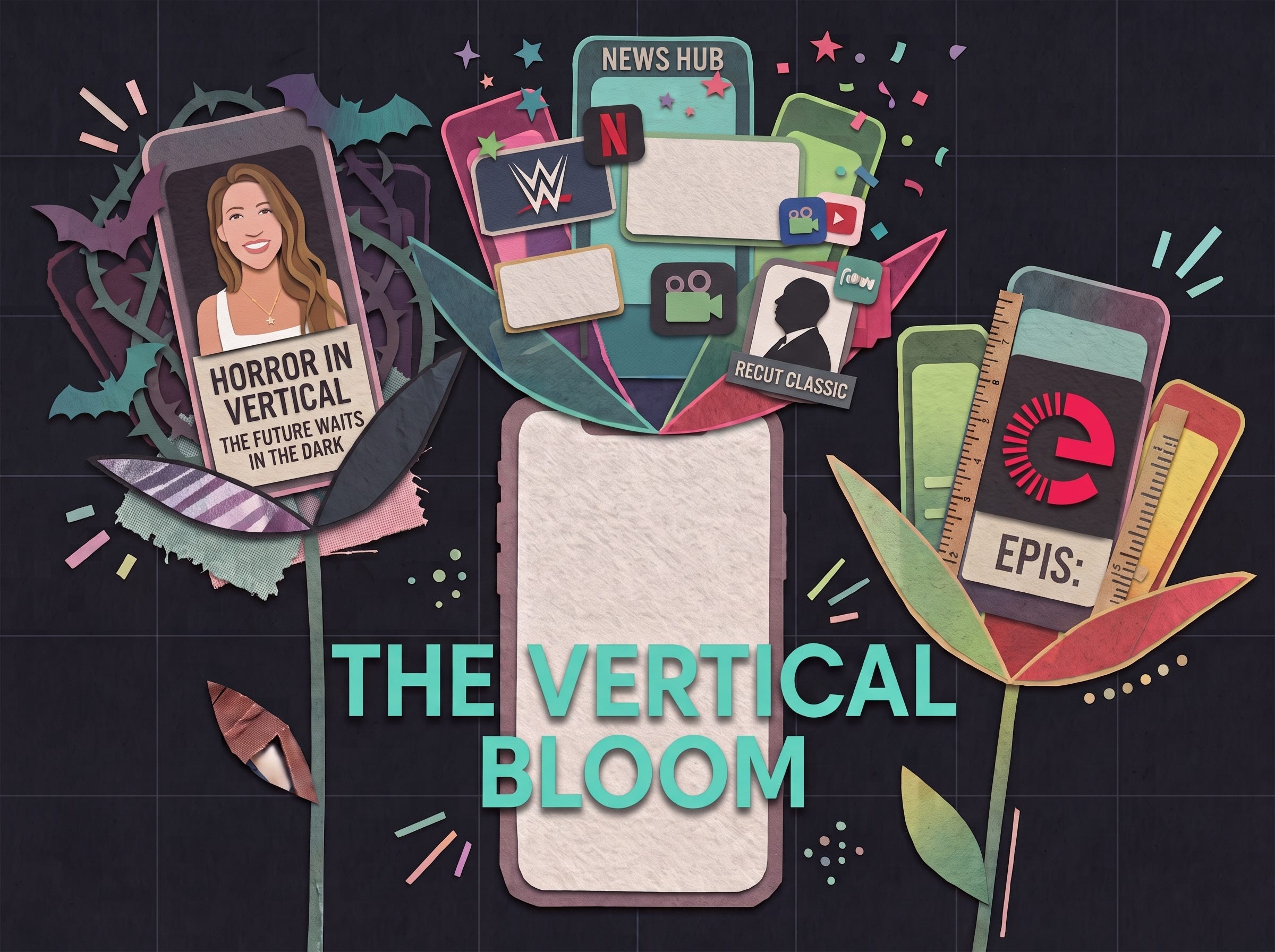
Welcome to The Vertical Bloom, a weekly dive into the fast-growing world of microseries and vertical storytelling. Here, we unpack the platforms, creators, and deals shaping the format that’s quietly redefining what it means to make—and watch—scripted content in the mobile age.

This week, YouTube-born franchises make their way to Netflix, WWE enters the microdrama ring, a Hitchcock classic is recut for phones, and RoseBerry launches a new home for original and repurposed vertical television.
But First-
Editor’s note: This week, Second Rodeo’s own Stacy Howard wanted to write about her steadfast belief and love of horror and its potential in the vertical space. I’ll let her take it from here:
THE FUTURE WAITS IN THE DARK
by Stacy Howard
Horror may be the most versatile genre in storytelling. It reaches into parts of the human psyche that few other genres can. Since the dawn of humanity, we’ve been fascinated by what we don’t understand. At its best, horror explores our deepest fears, our darkest impulses, and the things we’d rather not admit about ourselves.
Lately, horror has been impossible to ignore. Even seven and nine weeks after the releases of Backrooms and Obsession, respectively, both films were still generating seven figures at the weekly box office—a reminder that great horror doesn’t just open well, it has the ability to sustain audience interest long after opening weekend.
It’s also one of the industry’s greatest proving grounds. Some of the most influential filmmakers working today got their start in horror, where limited budgets often demand exceptional craftsmanship, creative problem-solving, and bold storytelling. It’s a genre that consistently rewards originality.
Just as importantly, horror continues to be one of the healthiest businesses in entertainment. Low- to mid-budget horror films regularly deliver some of the highest returns on investment in Hollywood, they remain remarkably resilient at the box office even as audience tastes shift, and horror fans are among the most loyal genre communities, eagerly embracing new voices and original ideas.
That’s why we believe horror matters so much for vertical storytelling. Its immediacy demands it. It’s structure can take it to new heights.
If premium vertical series are going to become a lasting entertainment medium, they need genres that push creators creatively while giving audiences something they can’t stop watching. The tension, cliffhangers, mystery, and emotional intensity that define great horror also happen to be the building blocks of great episodic vertical storytelling.
The question isn’t whether horror belongs in verticals. It’s who will truly unlock it first.
Who will discover the storytelling language that makes vertical horror feel native to the medium? Who will build the first breakout franchise that audiences can’t put down?
My bet is it’ll be the people willing to take a risk on something they truly love.
I plan to be one of them. Who’s coming with me?

Good Mythical Morning Expands From YouTube to Netflix
Beginning September 7, new episodes of Good Mythical Morning, Mythical Kitchen and Last Meals will arrive on Netflix the same day they publish on YouTube, suggesting the next phase of creator-to-streamer deals may be less about leaving digital platforms behind and more about extending proven internet franchises across both ecosystems.
WWE Steps Into Microdrama With ReelShort
WWE is partnering with ReelShort on an original live-action vertical starring Drew McIntyre, Joe Hendry and Jacob Fatu alongside microdrama regulars Marc Herrmann and Chase Mattson. It is a natural meeting of two forms built around heightened characters, serialized conflict and cliffhangers, and another sign that major fandom businesses see vertical as an extension of the core franchise.
Hitchcock’s The Lodger Is Recut for the Phone
Tattle TV has divided Alfred Hitchcock’s 1927 silent thriller into short vertical chapters, using AI-assisted reframing to bring the classic to mobile audiences. Less a blueprint than a provocative experiment, it raises the increasingly relevant question of whether legacy libraries can find new life through format translation, or whether vertical still demands stories built for the medium from the start.


Epis, From RoseBerry Media
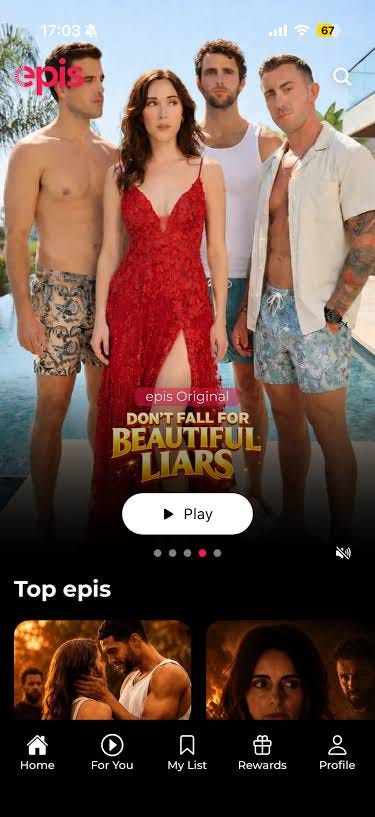
Epis is entering the market with a different version of the premium vertical pitch. Rather than building its catalog almost entirely around original romance and revenge dramas, the app combines new mobile-first productions with established television programs adapted into short vertical episodes. Its launch catalog includes more than 100 titles across drama, reality, dating, documentary and true crime, with library partners including A+E Global Media, All3Media International, Banijay Rights, Cineflix Rights and Fremantle. The strategy positions vertical as more than a production format. It becomes a new distribution window for existing television IP, while giving RoseBerry a place to test which genres and properties translate successfully to mobile. The opportunity is clear: unlock new audiences and revenue from catalogs that already exist. The larger test will be whether audiences experience these adaptations as a natural evolution of the original programs, rather than television compressed to fit a smaller screen.

The Platforms Are Starting to Look More Like Home
For the past two years, the vertical drama boom has largely been defined by dedicated apps such as ReelShort and DramaBox. These platforms did more than prove there was an audience for premium, serialized, mobile-first storytelling. They built the production pipelines, recommendation systems and payment models that helped establish an entirely new entertainment category.
But this week offered another reminder that the category is beginning to spread beyond those original borders.
Netflix is bringing three established YouTube franchises onto its service without taking them away from YouTube. WWE is entering microdrama through an original partnership with ReelShort. Epis is combining original vertical productions with BBC and Channel 4 programs reformatted for mobile. Tattle TV has attempted a similar experiment with Alfred Hitchcock’s 1927 film The Lodger.
YouTube, meanwhile, is approaching the same shift from another direction. As more automated content reaches the platform, the company has said it is working to reduce the spread of low-quality, repetitive AI content while preserving the openness that allowed its creator ecosystem to grow.
At first glance, these moves do not seem particularly related. Together, they suggest that digital-first and mobile-native entertainment is becoming less isolated from the rest of the media business.
That does not mean dedicated vertical apps are being replaced. Those companies continue to finance productions, develop talent and refine the storytelling and monetization systems that made the format viable. Larger platforms bring something different: enormous existing audiences, established creator communities and recommendation systems designed to connect content with viewers who may not already be looking for it.
Other creator industries have moved through versions of this transition. YouTube’s 2017 “adpocalypse” demonstrated both the scale and vulnerability of building on an open platform, as a shift in advertiser confidence quickly reshaped monetization and the kinds of content that could thrive. TikTok later replaced its Creator Fund with a Creator Rewards Program prioritizing original videos longer than one minute, changing its incentives as audience behavior matured. In music, artists releasing directly through distributors have grown faster than the wider recorded-music market, expanding the paths available to creators without eliminating labels.
Vertical may ultimately follow a similarly mixed path.
Some projects will continue to thrive inside closed, purpose-built apps. Others may benefit from open platforms where audiences, creators and fandoms already exist. Legacy libraries may find new distribution windows, while original productions move more easily between mobile apps, social platforms and traditional streamers.
For creators and studios, this may be the most encouraging part of the moment. More platforms experimenting with vertical means more potential business models, more routes to viewers and more freedom to find the right home for each story.
The question is no longer whether premium vertical storytelling belongs in the entertainment landscape.
The more interesting question is where it will feel most at home.
That’s it for this week’s Vertical Bloom.
We’re excited to keep building this into a weekly home for the ideas, experiments, and creative voices shaping vertical storytelling in real time.
We’ll be back next Thursday with more headlines, more analysis, and another look at where this medium is headed.
See you then.
Editor: Scott Brown
Writer: Franziska Harms