


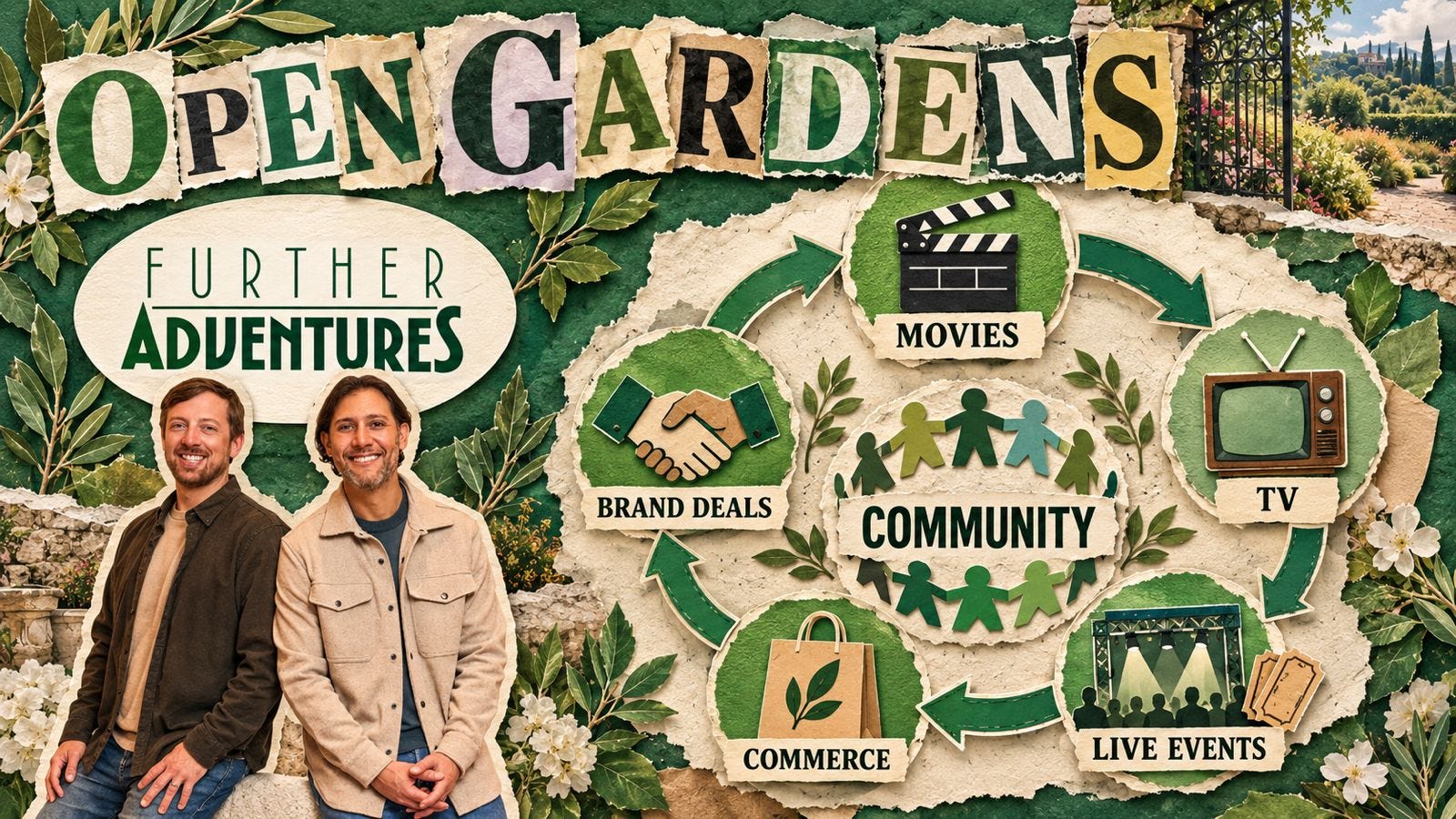
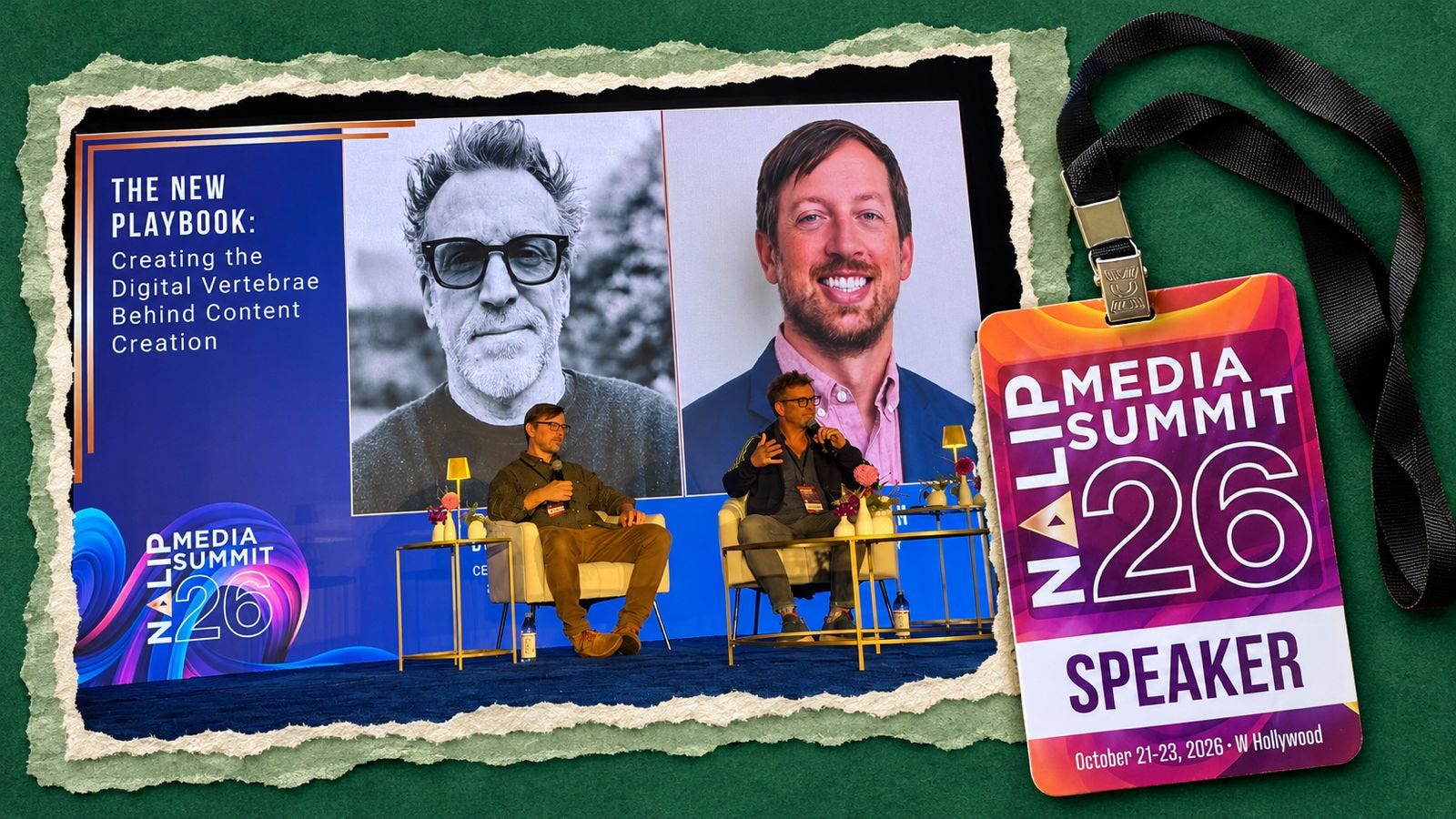
Every year, I have the honor of running a panel at NALIP—the National Association for Latino Independent Producers—at their annual conference. In July of 2025, I interviewed Whalar co-founder Neil Waller, who shared his ambition to build MTV for the next generation. Earlier this year, he and his partner James Street took that idea into the world with the launch of Lyrical Lemonade TV. Neil thinks and builds at a macro level. Its fascinating and inspiring to see how he thinks.
But for the filmmakers trying to navigate the changing landscape, this year I wanted to bring the conversation closer to the work: How are producers and production companies bringing the traditional film business and the creator economy together? What does that look like in practice?
I started asking around about who was doing it. I was surprised and how few examples turned up. But eventually those conversations led me to Ben Stillman, co-founder of Further Adventures.
Ben is running the kind of experiment we keep coming back to at Open Gardens: taking the experience and capabilities of the traditional film business and building a company with creators, with their ambitions at the center.
Below is a brief overview of Further Adventures, followed by our conversation. I’ve edited the transcript for length and clarity, marked the cuts, and added my own commentary between exchanges.
The business in brief
Further Adventures is a content studio that sits between digital and traditional media. It soft launched in 2024 and is led by Stillman and Steve Beckman, a childhood friend of Stillman’s who spent about a decade at YouTube.
Stillman’s background is firmly legacy. He started at Cinetic selling international distribution rights, co-founded Black Bear Pictures with Teddy Schwarzman in 2011 and eventually ran its TV studio, then founded Birchall Entertainment in 2022. His credits include The Imitation Game, I Care A Lot, Gold and Ben Is Back.
Further Adventures does three things, and keeps a traditional slate alongside them:
Invests in creator channels. Capital for channels with an audience that want to expand their output or their team.
Develops original IP. Projects built with creators and storytellers, often starting from an existing audience or community.
Helps creators go to Hollywood. Development, packaging and production support for creators who want to make features or series.
They have several projects in development across those buckets. One is Greener Grass Awaits, a feature based on a horror video game that found its audience on YouTube. A surreal horror story disguised as a late-night round of golf, the game built a cult following through gameplay videos that generated millions of views.
Further Adventures also maintains a traditional indie film slate, including Walter Thompson-Hernández’s If I Go Will They Miss Me (made on a microbudget—just crossed a million bucks in theater box), Ramzi Bashour’s Hot Water and Casey Modderno’s Here for the Weekend.
Two questions run through the conversation. What does a legacy company offer a creator who already has an audience? And what does it take in return?
The conversation
Ben Odell: Tell us your background and why you made this move.
Ben Stillman: I started in the traditional film business, working for a company called Cinetic in New York, which sells international rights, so I built an understanding of the business from more of an agent’s perspective. Then I went off to launch, in 2011, a company called Black Bear, which has grown in a lot of ways but at the time was really focused on production and film financing. We made movies like The Imitation Game and I Care A Lot. I really came to understand the business from not just a producer’s perspective but more of a studio perspective. Toward the end I was working in TV there, launching a TV studio, in an era when independent TV was still vibrant.
At some point I wanted to build my own thing. One of my childhood friends, Steve Beckman, was at YouTube for about a decade, and we’d always talked about ways we might work together. He was ready for a transition as well. There was a moment arriving of the convergence of what I have done for 15-plus years producing film and TV, and seeing some of the struggles of the marketplace, with the opportunities coming from what Steve’s expertise really was, which was the creator economy, digital storytelling and digital distribution. We decided to bring our expertise and relationships together to build a company that’s telling stories we’re proud of, supporting storytelling of all sorts with a bit more of a forward-thinking model.
What I like here is that Ben isn’t making some big declaration about creators being the future. He’s a producer with 15 years in the business who found the traditional marketplace too rigid and teamed up with someone who knew the digital side. That’s a different starting point from a legacy company adding a digital division. Both perspectives are there from the beginning. Of course, a lot depends on those two people and their judgment. I’m curious to see how they carry that into a bigger company.
Ben Odell: You could have kept making movies. Where did you see opportunity beyond that?
Ben Stillman: We’re intentionally diversified still. Two years into the company, we’ll do everything from investing in great channels, to creating original IP, to figuring out whether there are ways to expand on a creator’s audience and brand. For others, capital isn’t as much of a need. It’s really more, how can we bring our expertise, our relationships, our perspective to help them? If they have an interest in telling a story they’re going to bring to Hollywood, we can help navigate that, because so many people in this space have built their own businesses with just themselves or a couple of trusted partners. They’re not having to take on extra infrastructure, extra notes, extra perspectives, and that’s probably turned out really well for them.
A lot of our early conversations came down to: you have this audience, you’re a great storyteller, you can keep doing what you’re doing, but do you have aspirations to tell a 100-minute feature? […] There’s a before and after as far as how they’re thinking about it. Are they looking to do it in a roll-up-your-sleeves, bootstrap way, make the smallest version of it, versus partnering with A-list producers who come with all their talent relationships and the studio deal?
Creators have built businesses without a producer or studio weighing in on every decision. Why bring that in now? Ben seems to understand that he has to give them a good reason. And for a producer, it’s worth asking what the creator actually wants help with. Getting something made on a small budget and building it into a studio project are different jobs, with different deals.
Ben Odell: Take us through what investing in a channel looks like.
Ben Stillman: There are channels that have built up a meaningful audience and are now looking to raise another round to expand their output or bring in people. A lot of creators began as one person with a camera, and then they built a reliable audience that wants to see more of the story they’re telling, and that requires more time and support. Sometimes it’s hiring someone to oversee the brand deals and business relationships so they can focus on the creative, or someone who wants to have a writers’ room because they’ve been doing it for a number of years and now feel stretched too thin.
It’s not cookie-cutter. There are some that are almost a manufacturing problem, where they have more demand than they can support, so they need more capital for it. For others, it’s the trajectory of what they’re trying to do as storytellers, and the aspirations are changing. Within that we’re trying to figure out deals that make sense for both sides, because these are self-sustaining businesses, and if you’re taking on capital it has to make sense for them. For us, it’s the right balance of where we still have upside. We’re very focused on telling stories in the traditional space, but we want to support a digital channel too and find ways to bridge both, creatively but also from the business standpoint. That’s sometimes an interesting dance.
What interests me here is how practical the investment can be. A creator already has an audience but needs writers to make more shows or a business manager to keep up with the work. Further Adventures can put money toward that specific need or help organize their business better. Each creator needs something different, though, which means Ben and Steve have to spend time understanding the business before deciding if / where they can help.
Ben Odell: Do creators actually want what a traditional producer has to offer?
Ben Stillman: For sure. YouTube TV is so ubiquitous, and people are watching content on digital platforms so much that quality has to match that expectation for the audience. There is definitely a need to navigate the actual Hollywood system, with the gatekeeping, frankly, that people are not always used to. You need help to do something as simple as cast your project, and have those relationships. But there’s also an anxiety for a lot of people who are used to doing everything on their own terms to suddenly be on set with 50 to 150 people who are all trying to service their vision, and how to manage that. That’s not always an intuitive thing for someone who hasn’t done it before.
This is where an experienced producer can be really useful. Having a million followers doesn’t prepare you to run a 150-person set. A good producer knows how to do that. The trick is bringing that experience into the room without taking over or making the creator feel like they’ve lost control of their own project.
Ben Odell: What mindset shift does someone from legacy have to make to work with creators?
Ben Stillman: It’s been eye-opening and inspiring. I’ve been doing this for 15-plus years, and sometimes you get frustrated with how hard it is to make a movie that can be great. And then you approach something with the thought, oh, maybe we don’t need permission to do this. There are budgetary parameters, of course, but it’s really about leaning into that spirit.
On the business side, it’s interesting because traditional Hollywood is: you pay for it, you own it, right? That’s the way it works. Here are creators who have built their own audience, have their own IP that they’ve spent years developing in many cases, and that warrants a bit more collaboration. This shouldn’t be the thing where you’ve done a great job building something and now you have to hand the keys over. It should be a genuine partnership.
But what does a creator give up in exchange for that help? That’s where I think about the multi-channel networks, or MCNs, of the 2010s. Hollywood money came into YouTube, creators were called partners, and the companies often ended up owning the rights. Eventually, creators started asking what they were getting out of the arrangement.
I brought up Lyrical Lemonade TV because of how they structure that partnership. Music video director Cole Bennett curates the channel, bringing in creators to make shows for his audience. The partners fund the shows, but creators own a significant portion of their IP and shares in the ad sense, brand deals, etc. I wanted to hear how Ben thought about that trade and where he saw the business opportunity.
Ben Odell: If you’re sharing ownership with the creator, how does that change the business for you? Where do you see the opportunity beyond the film itself?
Ben Stillman: It speaks to the entrepreneurial approach that a lot of creators take. Think about traditional film: most movies, you’re lucky to be in net profits. If you’re investing, you’re getting 120 percent back, and that’s considered a win. But then it kind of ends there. So there may be more value to that individual film, but it’s not the most sustainable business. Creators have been more entrepreneurial: merch, brand deals, label concepts where they support other creators and build their own channels. For us it’s exciting to embrace shared ownership of the IP, which is okay. Maybe this film gets made and we’re not fully owning it as we might otherwise in a different system. But we’re also participating, helping support your larger business, which is really a mini corporation in terms of what they’re creating. That makes it a lot more exciting for what could actually make somebody.
I’ve always thought making a movie is a little like opening a restaurant, getting it packed, and then closing it two months later. If you’re lucky, you get to reopen a few years down the road with a sequel. We spend all that time and money finding an audience, then give them very little reason to stick around. Working with creators gives us a chance to rethink that. What else can we build together that keeps people coming back between films?
Ben Odell: Have you thought about movies as one piece of a bigger ecosystem around a community?
Ben Stillman: Definitely. We have one project we just shot in New York this past summer called Old Soul, with a creator [named Babish] whose YouTube channel is centered on cooking and recreating famous meals from movies. He always wanted to tell this specific story, and he has the good fortune of a very successful channel that kept him very busy. We met, we talked about this idea, and we said, let’s figure out how to make this actually happen. We made it this past summer, and I think it’s turning out great.
We’ll submit to the festivals. If it can be a Sundance or South by or Tribeca short, that’s still fun and meaningful. But we’ve also talked about whether there’s something else. His channel focuses on food. Is there a food-related concept and format that can accompany this short? Is this the type of thing we can take to 30 cities, doing a live show of what people know you for while also screening the film in a meaningful way? […] It’s not just making a movie and then putting it out there, hoping for the best, which frankly is a lot of what you do in traditional, right? It’s thinking about how you’re going to market something, how you’re going to build off it before it’s even a success, and how you get the audience to engage and invest as much as possible, so that they feel ownership of it, both for the success of the IP you’re building and for the other opportunities that come from it.
Babish’s audience comes for the food. The challenge is giving them a reason to follow him into a very different kind of storytelling.
Ben Odell: What do you look for in a creator who wants to move into a traditional format?
Ben Stillman: It’s a little bit subjective and intangible, but we’re always looking for a unique point of view. One of our original conversations, Steve and I, was that yes, it’s great to capture an audience on whatever digital channel, but not everyone’s going to film school anymore. Some people have been telling stories on TikTok or YouTube since they were eight years old and have honed those skills as storytellers. Being able to identify talent that has something to say and that wants to take the next step, whether it’s an extension of what they’ve already built or not, is what we look for.
I don’t think there’s one thing we’re looking for, but we’re looking for creators who aren’t following the trends, who aren’t following the algorithm. We’ll take projects with people who have only a couple thousand followers on YouTube because they seem like they have something to say and they’re putting stuff out consistently and it’s growing. It’s really the same thing we’re looking for on the traditional side, where you see a short and say, that’s someone I want to support the future of.
At Sundance, someone has already sorted through thousands of films before you sit down. YouTube doesn’t have that filter, and subscriber counts don’t tell you who can tell a story. Ben is bringing that same producer’s eye to YouTube, even to channels with a few thousand followers. That’s a bet on talent, and a harder one to sell to investors—which brings us to the next question.
Ben Odell: Do you have any rigorous way to value one creator’s community against another’s?
Ben Stillman: I would say it’s not. We maybe should be more rigorous with some of the process, but sometimes it’s gut. Depending on the creator, is this growing or not? If they’re selling merch, how does that merch sell? Have they done sub-channels from the main thing they’ve grown, and how are those numbers? There are many services we can pay for that give us very granular data, and that’s great. But it’s also just looking at it as all of us producers, but also consumers. You watch one thing and you’re like, I’m happy to watch this while I’m doing laundry and it entertains me, but I’m not going to pay 20 bucks and leave the house and spend two hours for my kids to go and see it, right? So what shows evidence-level commitment as an audience, that people who’ve been excited from the start will actually come along for?
There are also a lot of creators who’ve done incredible things and are starting to be on the downside of their influence, and are aware of it. Sometimes that’s an opportunity, because it’s how people creatively want to do something different. And there are other times where you look at it and people want valuations based on things that were happening three years ago and maybe not so much anymore.
Ben’s laundry test gets at a question I keep coming back to: will someone who watches a creator while folding clothes pay for a ticket and leave the house to see them? We’ve seen audiences make that leap with horror, but how much of that is about the creator, and how much is about the genre?
Ben Odell: Iron Lung, Obsession and Backrooms were three very different models. Do you expect this to translate beyond horror?
Ben Stillman: I agree they’re all distinct and worked in different ways. The timing of it, of course, yielded this mentality of the creator-to-traditional pipeline. When Steve was still on YouTube, we met with one of these filmmakers well before all this, when he was around 16. I think there are three very different scenarios, but there are things you can take from each.
It’s a great question. We thought a lot about this, because even before these three pictures there were a lot of horror shorts on YouTube that got the feature-film treatment, and some did well, some not. There’s an obvious intersection with a genre that people will still go to the theater enthusiastically to see, combined with an audience that was excited to support it because the creators made it. I do think it hasn’t been proven yet in other genres so much. But there’s a YouTube new wave, a lot of talented filmmakers who have taken the form of vlogging and done it with more narrative behind it, and it’s compelling. For us, a bet on talented filmmakers who happen to be putting stories on YouTube will yield an audience. And I want to celebrate the movies made for a few hundred thousand dollars, not only look for big box office records.
Horror makes this harder to read because it already brings an audience of its own. Comedy and drama will tell us more about how much of the draw is the creator—and whether the budgets make sense for the audience that follows.
Ben Odell: If I’m a producer with a couple of independent films and no capital, how do I make this shift?
Ben Stillman: It depends where you’re starting. If you’re looking to break into Hollywood and you’re trying to figure out whether to focus on finding that next great script or finding an interesting creator, I think there’s a lot of creators who don’t have great scripts who want to do a feature or a series. They have an audience and they’re doing one particular thing, but they don’t know how to transition. So if you have the scripts, and maybe the doors to getting a meaningful filmmaker or cast on board are closed or nearly closed, maybe there’s a creator interesting to you. You reach out, and you find a way to be the one proactively making that bridge. I think that’s something a lot of creators are looking for.
It depends on your own network. Traditionally, thinking about a project is the package: script, filmmaker, cast. Now it’s also, how do you have something that extends beyond that? Do you have a creator who’s involved? Someone in your life who has a clothing label or an interesting publication can amplify the potential audience of a project.
I think a lot of producers hear “creator economy” and feel like they have to start over. But finding a voice you believe in and bringing them the right material is work we already know how to do. We just have to get used to looking in different places.
Ben Odell: What excites you about the future of entertainment?
Ben Stillman: Beyond access to new voices and storytellers coming from digital spaces, the more people get inspired and excited about [Backrooms, Obsession, Iron Lung] and so on, the more that’s going to motivate people who maybe wouldn’t otherwise give it a try. I’m really excited that people are going to the theater again. This younger generation seems to really care about that. The economics of that are exciting, and it’s not as dire as it was a few years ago. […] Here’s an idea with a passionate audience online, and how do we tell that story so it will play in the theater, and people will show up because it’s a great movie, but also because they’re bringing to it this expectation, this understanding, this enthusiasm. That’s something I’m very optimistic about.
What I take from it
What interests me about Further Adventures is that Ben and Steve are building this while still making traditional indie films. That’s how I think this shift will happen for a lot of us. We bring what we know, find people who know what we don’t, and figure out where we can build a business together. Sometimes a creator needs money to hire writers. Sometimes they need someone who can cast and run a bigger production. And if we want to participate in the business they’ve spent years building, we have to be willing to share ownership of what we make together.
It’s still early. The company is two years old, we haven’t seen the deals, and Ben is candid about how much of choosing creators comes down to instinct. We also have more evidence that this works in horror than in other genres. I’m interested in seeing what these first projects teach them, especially where the audience follows and where it doesn’t. Those are lessons the rest of us could use.