For those of us who grew up before the internet flattened everything into clips and feeds, NFL Films felt almost magical. It was hypnotic. Seductive. Myth-building in the purest sense. You didn’t have to love football to fall under its spell. You just had to watch.
An NFL Films documentary could make you care about teams you’d never seen play, players you’d never heard of, seasons that ended decades before you were born. It made football feel important in a way that went far beyond the game itself.
That feeling has been on my mind lately as the season ends.
I’ve been spending time with a friend who works as a content strategist, and our conversations keep circling the same reality: most brands know they need to behave like media companies, but very few actually do. Some dabble. Some commission a campaign here or there. Some think hiring a couple of creators is enough to check the box. But the brands that are winning aren’t treating content as decoration. They’re being aggressive. They’re building real narrative engines.
She made an observation that stuck with me. Over the next few years, there’s going to be a genuine gold rush around helping brands do this well. Not just producing ads or social assets, but building storytelling systems that actually create emotional connection and long-term loyalty.
Last week I wrote about Pufferfish, a creator-led agency built for brands that win through speed, social fluency, and cultural proximity. That represents one end of the spectrum. The fast, social-native side of brand storytelling.
What’s funny is how often these conversations treat brand-as-media as a recent invention. Red Bull gets cited constantly, and for good reason. It’s a great example. But it’s not the first one.
While nerding out on the NFL in the run-up to the Super Bowl, and mentally preparing myself for the emotional hangover of the post-season, I fell down a rabbit hole I had never paid attention to: a small, mostly forgotten chapter of NFL history involving a man named Ed Sabol and the birth of NFL Films.
Looking back now, it’s clear NFL Films was one of the earliest examples of a brand deliberately building power through a strong content strategy. And it did so through a cinematic, emotional approach to storytelling that aligns almost perfectly with the skill sets legacy filmmakers already have, and that I believe will be in increasingly high demand as more brands build content strategies and look for ways to differentiate.
Forgotten, maybe. But it explains a lot about how the NFL became what it is today.
A Small Bid That Changed Everything
In 1962, the NFL quietly put the rights to film its championship game up for bid. The year before, those rights had sold for $1,500. This wasn’t considered a meaningful asset. Games were broadcast live and then effectively disappeared. Tape was reused. Archiving wasn’t a priority. History, as a concept, barely existed.
Then Ed Sabol bid $3,000.
Sabol wasn’t a television executive or a sports journalist. He was an overcoat salesman in Philadelphia who hated his job and happened to be a frustrated artist. His real passion was filming football, specifically his son’s high school games, where he had been quietly sharpening his instincts and developing a thesis about how sports should be filmed.
He didn’t pitch better coverage. He pitched emotion.
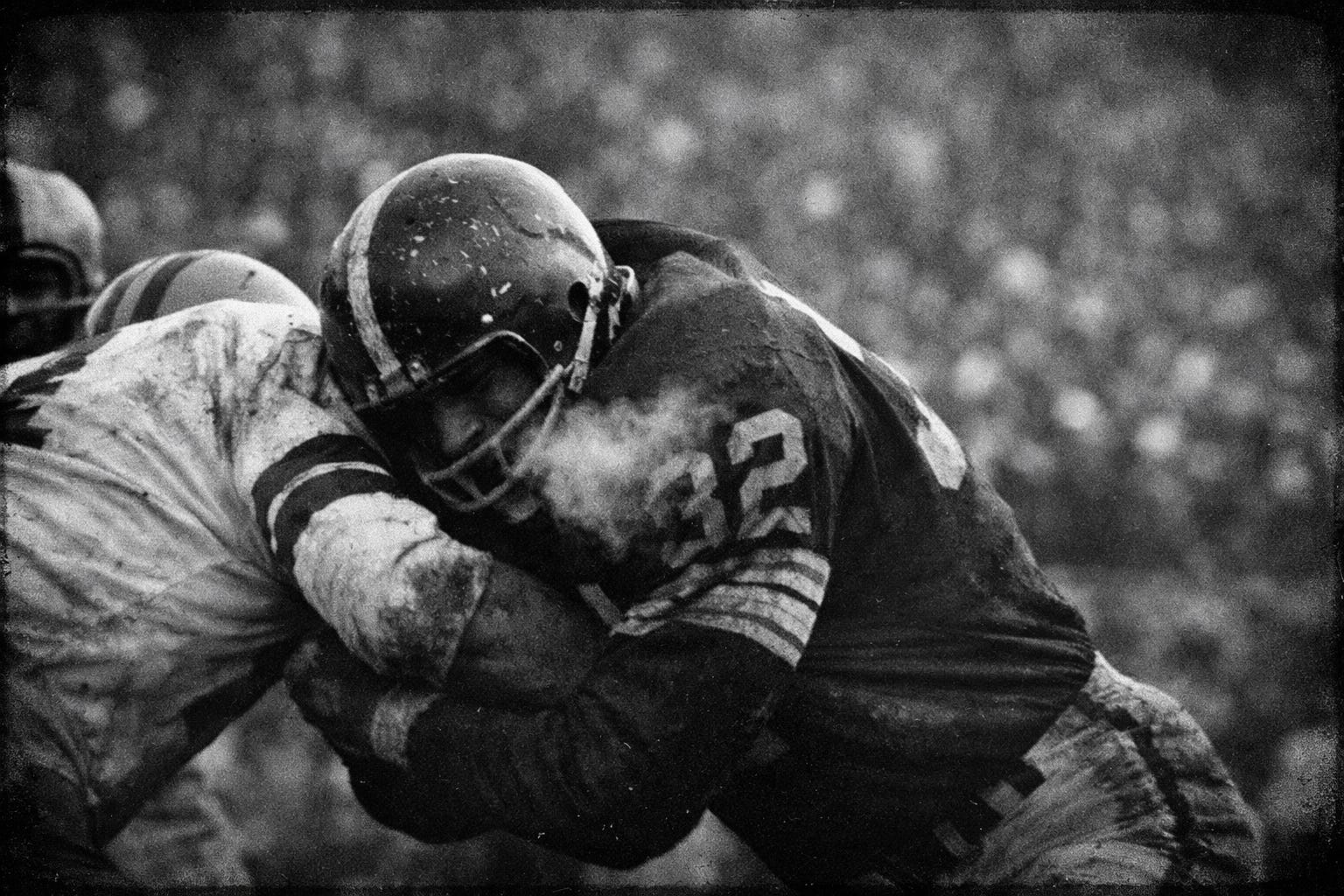
He talked about getting close to the players. About faces instead of formations. About sweat, breath, exhaustion. He talked about slowing the game down so people could actually see what effort looked like. He believed football deserved to be filmed the way movies filmed war, not as information, but as experience. And then there was the “voice of God” narration… Game changer. (You gotta love Leiv Schrieber channeling the OG voice, John Facenda, in recent years).
Pete Rozelle, a former PR and marketing executive who had recently become NFL commissioner, listened. And then he took a chance on a guy with no professional credentials, just a point of view.
That decision would end up changing the league far more than anyone realized at the time.
Filming Football Like It Was Cinema
What Sabol delivered didn’t look like sports television. It looked like something else entirely.
Cameras were on the sidelines, not floating safely above the field. Slow motion lingered on collisions, not just touchdowns. Music replaced crowd noise. Narration turned games into stories with beginnings, middles, and endings.
Football stopped being information and started becoming memory and mythology.
The result wasn’t just a better highlight reel. It was a different emotional contract with the audience. Viewers weren’t being told what happened. They were being invited to feel what it meant.
Rozelle immediately understood the implication. This wasn’t promotion. This was identity.
When the League Became Its Own Storyteller
A few years later, the NFL bought Sabol’s company and renamed it NFL Films. On paper, this looked like a modest production acquisition. In reality, it was one of the most important brand decisions in modern sports.
The NFL decided it would no longer outsource its story.
Every game would be archived. Every season would be shaped. Heroes and villains wouldn’t emerge accidentally. They would be framed, contextualized, remembered. Music, narration, slow motion, and access weren’t aesthetic choices. They were tools of meaning.
NFL Films didn’t sell tickets or merchandise directly. It did something more powerful. It taught fans how to feel about the league.
Teams became archetypes. Players became characters. Even failure was dignified. Even losing seasons had narrative weight.
This is the part that’s easy to miss in hindsight: NFL Films didn’t document popularity. It created the emotional conditions that allowed popularity to compound.
It has never been and never will be a huge revenue driver. Its the fuel that powers the NFL revenue engine.
The Funnel Before Funnels Had Names
Long before marketers talked about funnels, the NFL had one.
NFL Films sat at the top, pulling people in with meaning rather than messaging. It made casual viewers curious. It gave fans language for their obsession. It turned Sunday games into rituals and off-season content into anticipation.
From there, everything flowed naturally.
Games weren’t isolated events. They were chapters. Teams weren’t local businesses. They were symbols. Fans weren’t customers. They were members of a tribe.
Television amplified reach. Merchandise monetized loyalty. Ticket sales benefited from emotional investment. But the engine that powered all of it was story.
The NFL didn’t just win attention. It sealed a relationship.
Why This Worked When Other Sports Didn’t
Baseball had history but no unified narrative voice. Boxing had stars but no continuity. College football had tradition but little central control.
The NFL had something different: a single, coherent way of telling its own story across decades.
By owning its archive and its tone, the league created consistency. Fans knew what the NFL felt like, even when teams changed, stars retired, or seasons disappointed.
That consistency is what brands today struggle to manufacture after the fact.
The Lesson Brands Keep Missing
Most brands today focus on distribution first. Platforms, algorithms, reach. Story is treated as a layer that sits on top of marketing.
The NFL flipped that order.
Story came first. Distribution followed.
Ed Sabol wasn’t thinking about funnels or engagement metrics. He was thinking about dignity, struggle, and memory. He understood that if you could make people feel something consistently, everything else would take care of itself.
That’s the part worth revisiting now, as brands try to build communities instead of campaigns.
You don’t start by asking where to post. You start by asking what story you’re willing to tell, repeatedly, for years. Football was played on the field. The NFL was built in the editing room.
Most brands are still trying to learn the difference.
A Final Thought on Prioritizing Community
There’s a whole other layer to the NFL story that sits underneath NFL Films, and it’s easy to miss because we usually talk about it in business or competitive terms rather than emotional ones.
From very early on, the league made a series of structural choices that quietly prioritized the health of the community over the dominance of any single team. Revenue sharing. The draft. Salary caps. Constant rule tweaks. All designed to keep competition as even as possible, even when those decisions frustrated owners, fans, or stars in the short term.
This wasn’t about fairness in a moral sense. It was about faith.
By constantly pushing new teams toward the top and preventing dynasties from becoming permanent, the NFL trained its audience to believe that every season mattered. That hope wasn’t abstract. It was rational. Next year could be different. Your team was never truly dead.
That belief creates steadiness. Not boredom, but trust.
Fans don’t drift away when their team loses for a few years, because the system itself promises renewal. The league isn’t just staging games. It’s protecting the long-term emotional investment of the people watching them.
NFL Films amplified this in a crucial way. By treating every season as part of a larger epic, and every team as worthy of myth-making, the league avoided over-identifying with a small handful of winners. Even losing teams were given dignity, context, and a place in the story.
You really could write an entire separate piece about this. About how the NFL’s evolving rules and structures are less about optimizing competition and more about preserving belief. About how parity isn’t a side effect. It’s the product.
Put differently, the NFL didn’t just build a funnel. It built a reason to keep believing in the funnel.
That combination, competitive balance on the field and narrative balance off it, is what allowed the league to grow without fracturing its audience. And it’s the part most brands miss when they talk about community.
Community isn’t built by rewarding the loudest winners forever. It’s built by creating a system where people believe they’ll matter again.
A New Era of Brand Builders
Which brings me back to that feeling from the beginning. Sitting on the floor as a kid, watching an NFL Films documentary about a team I didn’t root for, in a season I didn’t remember, and somehow caring anyway.
The NFL understood early that if you combine cinematic storytelling with systems that protect belief, you don’t just create fans. You create continuity. You create trust. You create something people come back to, season after season, even when their team lets them down.
As more brands realize they need to build emotional relationships, not just run campaigns, it’s worth revisiting this little chapter of NFL history. Not because football is special, but because the lesson is portable.
The opportunity over the next few years isn’t just to help brands make more content. It’s to help them build meaning. To treat storytelling not as decoration, but as infrastructure. NFL Films did that decades ago, before anyone used the language we use now.
What’s different today is scale. As brands rush to become content creators, the demand isn’t just for more content. It’s for better content. Cinematic content. Emotional content. Storytelling that builds myth, memory, and belief rather than filling feeds.
That’s where the real opportunity is.
Because this next phase won’t be won by tools or platforms. It will be won by people who already know how to do what Ed Sabol did instinctively. Turn effort into meaning. Turn moments into stories. Turn audiences into communities.
And I think there’s a real business in that. In handpicking the right legacy storytellers, not to make thirty-second spots, but to help build the myths around certain brands.
For the storytellers paying attention, this moment isn’t about reinvention.
It’s about recognition.


Great post about the grand history of NFL Films Ben! And the NFL soundtracks were a huge part of the storytelling too! As the NFL sells off different games to Amazon and Netflix I am shocked at their inability to create impactful storytelling in the broadcasts. I hope they read this post and watch some classic NFL Films to understand the importance of the legacy!
Gran historia cinematográfica de este deporte, gracias por compartirla.