The Proprietary System Meets the Open OS: What Creators Have, What Hollywood Offers, and Who Sets the Terms
When I started this newsletter 18 months ago, it felt like a white space. Very few people were writing seriously about the convergence of Hollywood and the creator economy — the deal structures, the leverage dynamics, the fundamental question of what each side actually has that the other needs. Now it seems like it’s all anyone talks about.
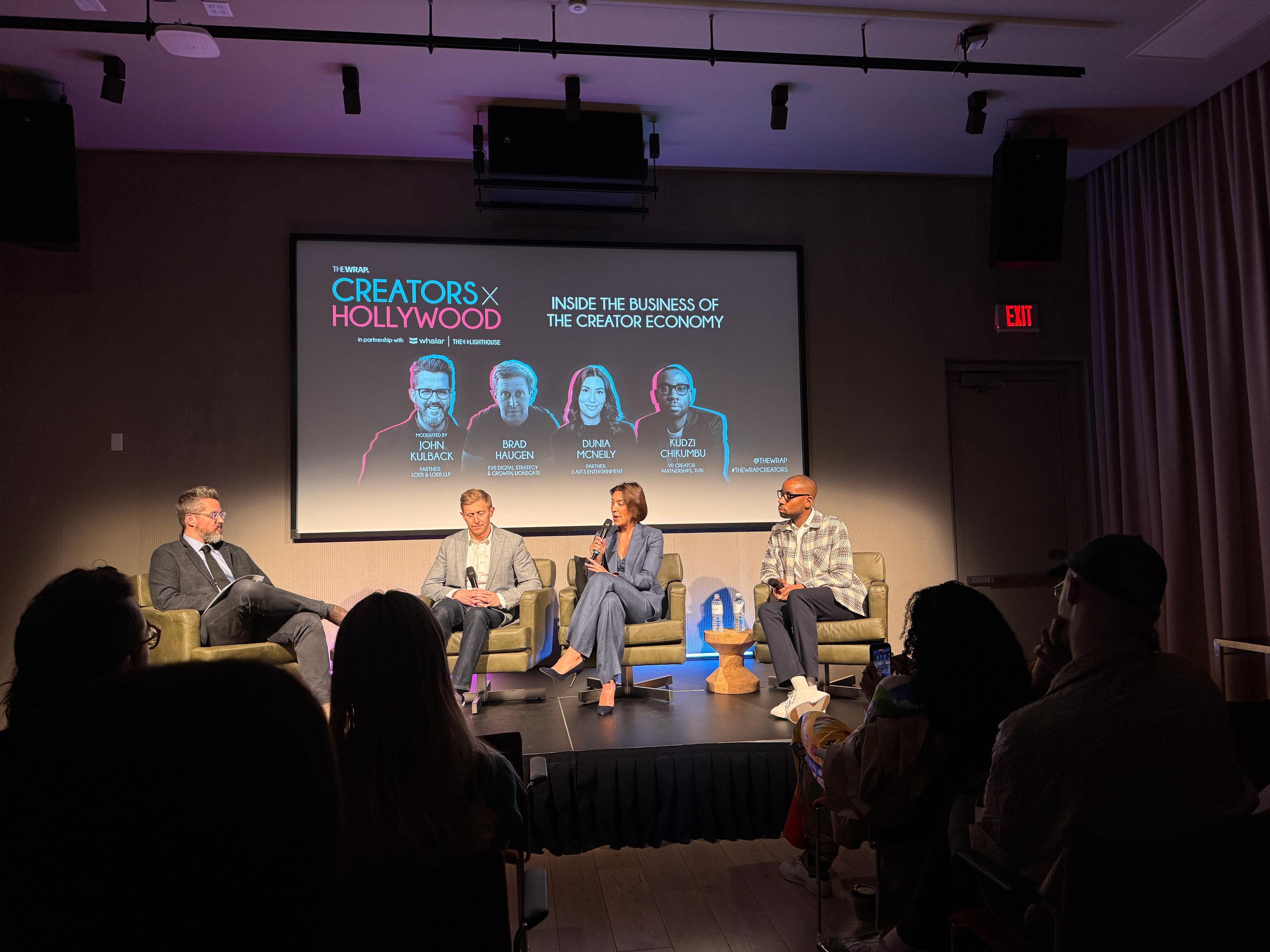
Which is how I ended up at The Lighthouse in Venice last week, watching The Wrap’s Creators x Hollywood panel on deal structure — a room full of industry people nodding along as a Lionsgate EVP, a partner at 3Arts Entertainment, and Tubi’s VP of Creator Partnerships explained, with apparent ease, why they’ve surrendered the one thing Hollywood never surrenders.
Creative control.
The panel was framed as a conversation about partnerships. But the more interesting conversation happening underneath it was about something harder to name: what Hollywood actually has that creators need, and whether the answer to that question is changing faster than either side wants to admit.
The Label Is the Tell
Brad Haugen, EVP of Digital Strategy at Lionsgate, dropped the most honest line of the afternoon almost as an aside.
“I don’t think the creator economy is actually a real thing,” he said. “I think it’s traditional Hollywood people bucketing a new generation of talent coming up in a new and different way, and they don’t know how to define it, so they just defined it.”
Sit with that for a second. Because if he’s right, it reframes the whole conversation.
The creator economy isn’t a sector. It isn’t a genre. It’s an operating system — open architecture, no fixed gatekeepers, anyone can build anything on it and own what they build. Hollywood is the opposite: a proprietary system with defined slots, where talent has historically plugged into infrastructure it didn’t own and couldn’t modify. You got the deal. You made the thing. The studio kept the IP.
The label “creator economy” is what a proprietary system invents when it encounters an architecture it can’t integrate. You name what you can’t control. And the reason Hollywood spent years struggling to name it is the same reason it’s now struggling to partner with it on equal terms — the OS doesn’t have a slot for the kind of creative ownership that creators have built their entire businesses on.
Why Leverage Flows to the Creator
This is where the creative control question actually starts. Not with culture, not with values, not with Hollywood having a sudden change of heart about sharing power. With architecture.
Creators have leverage right now because Hollywood is trying to run legacy logic on a new operating system. The deals that work — the ones the panel kept returning to — aren’t acts of generosity. They’re what happens when the proprietary system admits it can’t force the native app to rewrite itself.
The audience already lives in the open system. It was built there, it trusts what was built there, and it follows the people who built it. Hollywood needs access to that audience. The creator already has it. That asymmetry is the leverage.
Which is why creative control has become the first negotiating point, not the last. When MrBeast was shopping Beast Games to streamers, Amazon won the deal not on the size of the check but because they offered full creative control. Netflix was reportedly in the bidding and lost. The creator had the audience. The platform that was willing to leave the OS alone got the deal.
But leverage isn’t a business. And this is where the panel got genuinely interesting.
What You’re Actually Trading For
Most coverage of the Hollywood-creator convergence stops at the leverage question. Who has the power? Who’s getting the better deal? That’s the wrong frame. The more useful question is: what are creators trading their leverage for?
Because the answer isn’t the same for everyone. And the three people on that stage were each describing a different version of the trade.
Kudzi Chikumbu, Tubi’s VP of Creator Partnerships, described the lightest version. No notes. No interference. After an exclusivity window, the creator owns the IP and can distribute it elsewhere. “We want to be the exact opposite” of the traditional development process, he said — the one where you make the pitch, wait for meetings, get notes, and end up with something you don’t want to promote.
Tubi can afford to make this offer because their business model doesn’t require owning your show. Tubi is an AVOD platform — advertising video on demand — which means they capture value through ad inventory against engaged audiences, not through IP ownership in perpetuity. They need your audience to show up and watch. They don’t need to own the thing that brought them there. With $1.1 billion in revenue in fiscal year 2025, 100 million monthly active users, and a recommendation engine built around niche content categories, Tubi has built a business where the creator’s freedom is structurally rational, not just culturally correct.
The example Kudzi kept coming back to is Nobella Noor — a South Asian creator who came to him wanting to make one of the first South Asian home lifestyle shows on a major streaming platform. His answer: do your thing. She built her own production team. He gave no notes. The show comes out in May. She owns it after the window closes. That’s the Tubi deal.
Brad Haugen’s version of the trade is different, and worth taking seriously on its own terms. Lionsgate isn’t leading with freedom — they’re leading with infrastructure. Specifically, the distribution engine.
“The amount of knowledge in the worldwide television distribution department has been really eye-opening to me,” he said. People who can look at a 12-episode show and tell you immediately whether it’s sellable in South Korea, whether it needs 24 episodes for certain markets, what the international appetite looks like before you’ve finished production. That’s not something a creator builds alone. That’s decades of institutional knowledge embedded in a system that moves product around the world.
The Markiplier example he raised captures what the best version of this trade looks like. What Markiplier did with Iron Lung wasn’t just make a movie — he brought his audience into the journey of making it. By the time the film came out, the fans weren’t there for the film. They were there for him. The distribution infrastructure amplifies what a creator has already built. It doesn’t replace it.
Lionsgate is also, notably, trying to learn the OS before asking creators to trust them inside it. They’ve been putting shows on YouTube for free, cutting up The Royals for short-form, experimenting with how to grow audiences on new platforms using content they already own. The bet is that you can’t be a good partner in the open system if you’ve never tried to operate in it yourself.
Dunya McNeily, partner at 3Arts, is solving for the piece that both Tubi and Lionsgate leave out: the financial architecture that makes creative freedom sustainable over time.
Her version of the trade is the Icelandic Water model. Her client Julianne Hough wanted to build an intimate interview show — mornings after Dancing with the Stars, guests from the cast. Dunya went to Hough’s long-term brand partner first, got the budget, structured it with no exclusivity, then sold additional brand partners into the series, keeping the product integration light enough that it was placement, not commercial. The show worked. They’re doing another one.
“Ownership is everything,” she said. “My favorite term in the world is mailbox money, and I exist to create mailbox money for my clients.” That means equity, royalties, brand deals structured around long-term value rather than short-term fees. It means treating every content partnership as a piece of a larger business architecture, not a standalone project.
And it means knowing when to say no. “There are so many opportunities coming to these creators — here’s money, here’s money, here’s an opportunity. But you have to say no, and you have to take a step back and think like a true business person for longevity.”
Need, Want, and Ready — Three Different Conversations
Here’s the distinction the panel kept dancing around without quite landing on: not every creator should be doing this. And the ones who should aren’t all doing it for the same reasons.
Some creators genuinely need what Hollywood has to offer. The thing they want to make requires capital they don’t have, production infrastructure they haven’t built, distribution reach that takes decades to assemble. For them, the trade is real and the terms matter — because they’re not just looking for a step-up, they’re looking for a partner who can actually help them make something they couldn’t make alone.
Some want it without needing it — for the legitimacy signal, the audience expansion, the sense of having crossed over. That’s a legitimate choice, but it’s a different negotiation. The risk is trading creative control for something that doesn’t require it.
And then there’s the third category, which Kudzi named directly and the panel mostly skirted: creators who think they’re ready but aren’t. Not because of talent, but because of community.
His greenlight criteria at Tubi are three things: original creativity, a fandom that matches the platform, and a creator with the passion and capacity to make the jump. The middle one is the filter that most people miss. He’s not looking for follower counts. He’s looking for audiences that travel — communities that will follow a creator from their native platform to a Tubi, a streaming service, a movie theater. “Niche is the core,” he kept saying. What he means is that depth matters more than breadth. A million followers who found you through an algorithm is a different asset than a hundred thousand people who actively seek you out.
I’ve been thinking about this a lot lately — the question of what makes a community portable, what gives it the structural integrity to travel with a creator into new formats and new platforms. It’s a different question than audience size, and it’s the one that actually determines whether a Hollywood partnership works or fails. I’ll be writing about it directly in a future piece, but it’s worth flagging here: the quality of the community is the variable that most deal conversations don’t price correctly.
What Hollywood Keeps, What It Loses
Let’s bring this back to legacy storytelling for a moment, because there’s a version of this conversation that lets Hollywood off too easy.
Capital has other sources. Brands, private equity, platform licensing deals, direct audience funding — the creator economy has spent a decade building alternative pipelines that didn’t exist before. Institutional knowledge, the kind Brad described in Lionsgate’s distribution department, is real and hard-won. But it also gets hired. People leave studios. Infrastructure gets replicated. The advantages that Hollywood holds today are durable in some places and fragile in others.
What’s already gone — and not coming back — is the leverage to control the creative process. That ship has sailed. The OS doesn’t give it back. And compounded over time, especially in the middle and lower budget tiers of production where the math is tightest, studios will have to give up more of the development and production model not because they want to but because the alternative is losing the talent entirely. The high end, the tentpole, the franchise machine — that may hold its own logic for a while longer. But the middle of the market is where the pressure will be felt first and most permanently.
At the same time, something else is happening that rarely gets named in these conversations. The category of storyteller is dissolving. A generation of creators is coming online who will never call themselves filmmakers or screenwriters or directors. They’ll just be creators. They’ll make a podcast and a YouTube series and a feature film and a live experience and those things will live on whatever platforms make sense at the time. The format won’t define the person. The person will move through formats the way a musician moves through albums — as expressions of the same voice, not as separate careers.
This matters for Hollywood because it changes what the partnership is actually for. If you can’t control the creative process and you can’t own the category, what’s left?
Here’s what I think is left, and I’d argue it’s more valuable than what’s being lost. Think about the great record producers — not the musicians, but the people in the room who hear something the artist can’t hear from inside the song. Rick Rubin. Quincy Jones. Brian Eno. They don’t play the instrument (ok the latter two are/were amazing musicians but go with it). They don’t own the music. But they bring something that elevates the work in ways the artist alone can’t access. FX is the television version of this. Smart executives who seek out singular voices and make them sharper — not by controlling them but by understanding them well enough to push back at exactly the right moment.
That function — the elevation function — doesn’t diminish as creators gain leverage. It grows in value. Precisely because the gatekeeper role is dying, what remains is something rarer and harder to replicate: the experienced collaborator who knows the difference between a note that serves the work and a note that serves the institution.
As a producer, I’ve had my best experiences with exactly those executives. The ones who don’t try to control the work, but who understand it well enough to challenge it. I actively seek them out. And I’d argue every serious creator — whether they come from YouTube or film school or neither — eventually learns to do the same.
Hollywood’s future, at least the part of it worth preserving, probably looks less like a development machine and more like a collection of those people. The question is whether studios can reorganize around that before the creators figure out how to find them directly.
Both Sides of the Trade
The panel ended with the usual optimism. Trust the creator, be a good partner, the audience knows what’s real. All true. But the more useful version of that optimism is specific rather than general — because the trade works differently depending on which side of it you’re on.
For creators: the leverage is real, but it’s only useful if you know what you’re trading for. Capital, infrastructure, distribution reach, and the elevation function are four different things. Not every Hollywood partner offers all four. Not every creator needs all four. The ones who know exactly which bucket they’re in — need, want, or neither — will negotiate the right deal. The ones who don’t will end up with freedom they can’t fully use, or constraints they didn’t have to accept.
For legacy players: the control function is gone, and fighting to preserve it is a losing bet. The studios, platforms, and executives who figure out how to be genuinely useful to creators — not as gatekeepers but as collaborators, not as owners but as infrastructure — will have a role in what gets built next. The ones who don’t will find that capital, knowledge, and distribution are all available elsewhere. What isn’t available elsewhere is the elevation function. That’s the scarce resource. That’s what’s worth building around.
Brad’s throwaway line — that the creator economy is just Hollywood’s label for a new generation of talent it doesn’t know how to categorize — cuts both ways. It’s a warning to legacy players about the cost of misunderstanding what’s actually changed. And it’s a reminder to creators that the label doesn’t matter. The leverage does. And the leverage comes from one place.
An owned audience so specific, so loyal, and so portable that no platform — proprietary or open — can replicate what it means to that community. That’s not a negotiating position. That’s the whole game.


